Mesothelioma Lawyer Missouri: Legal Rights for Lawrenceville Refinery Workers
You just got a diagnosis. Mesothelioma. Asbestosis. Lung cancer. Before anything else, you need to know this: Missouri law gives you five years from the date of diagnosis to file an asbestos claim under Mo. Rev. Stat. § 516.120. That window is not infinite, and proposed legislation could shorten it without warning. If you worked at the Texaco Lawrenceville refinery, call an experienced mesothelioma lawyer Missouri today.
Missouri’s Five-Year Filing Deadline: What Lawrenceville Workers Must Know
Missouri currently allows five years from diagnosis to file an asbestos personal injury claim under § 516.120 RSMo. That is the law today. Pending legislation in 2026 could significantly shorten that window or impose additional procedural burdens before it can be used.
Do not assume you have time to wait. Workers who delay often find that witnesses have died, records have been destroyed, and manufacturers have resolved their remaining trust fund assets. The claim you could file today may not be available in two years.
Workers who spent careers pipefitting, insulating, boilermaking, pulling electrical, and running maintenance at the Lawrenceville refinery breathed asbestos fibers released from products supplied by Johns-Manville, Owens Corning, Garlock Sealing Technologies, Armstrong World Industries, Combustion Engineering, and Celotex. Nobody warned them. Nobody issued respirators. Nobody disclosed that the white dust coating their clothes and filling their lungs caused mesothelioma, asbestosis, and lung cancer.
Those diagnoses are arriving now, decades later, because asbestos diseases carry latency periods of 20 to 50 years. The connection between the exposure and the diagnosis is documented, scientifically established, and legally actionable.
Call now. An asbestos attorney Missouri can evaluate your case and explain your options for and .
Why Former Lawrenceville Refinery Workers Are Filing Claims Now
Rotating union contractors—insulators, pipefitters, boilermakers—accumulated exposures across multiple industrial sites and from products supplied by multiple manufacturers. Documenting which manufacturer supplied which product at which phase of operations determines who you sue and what you recover. That analysis is what experienced asbestos attorneys do at intake.
Missouri union locals, including UA Local 562 and Boilermakers Local 27, were frequently involved in refinery operations throughout the Mississippi River industrial corridor. Cross-state exposure histories add complexity to these claims. An attorney who handles only occasional asbestos cases will miss defendant targets that an experienced firm identifies immediately.
In Illinois, plaintiffs may also have options to file in Madison County or St. Clair County, both of which have established procedures for asbestos litigation. Your attorney will evaluate which jurisdiction produces the best outcome for your specific exposure history.
The Lawrenceville Refinery: What Former Workers Need to Know
Location and Operations
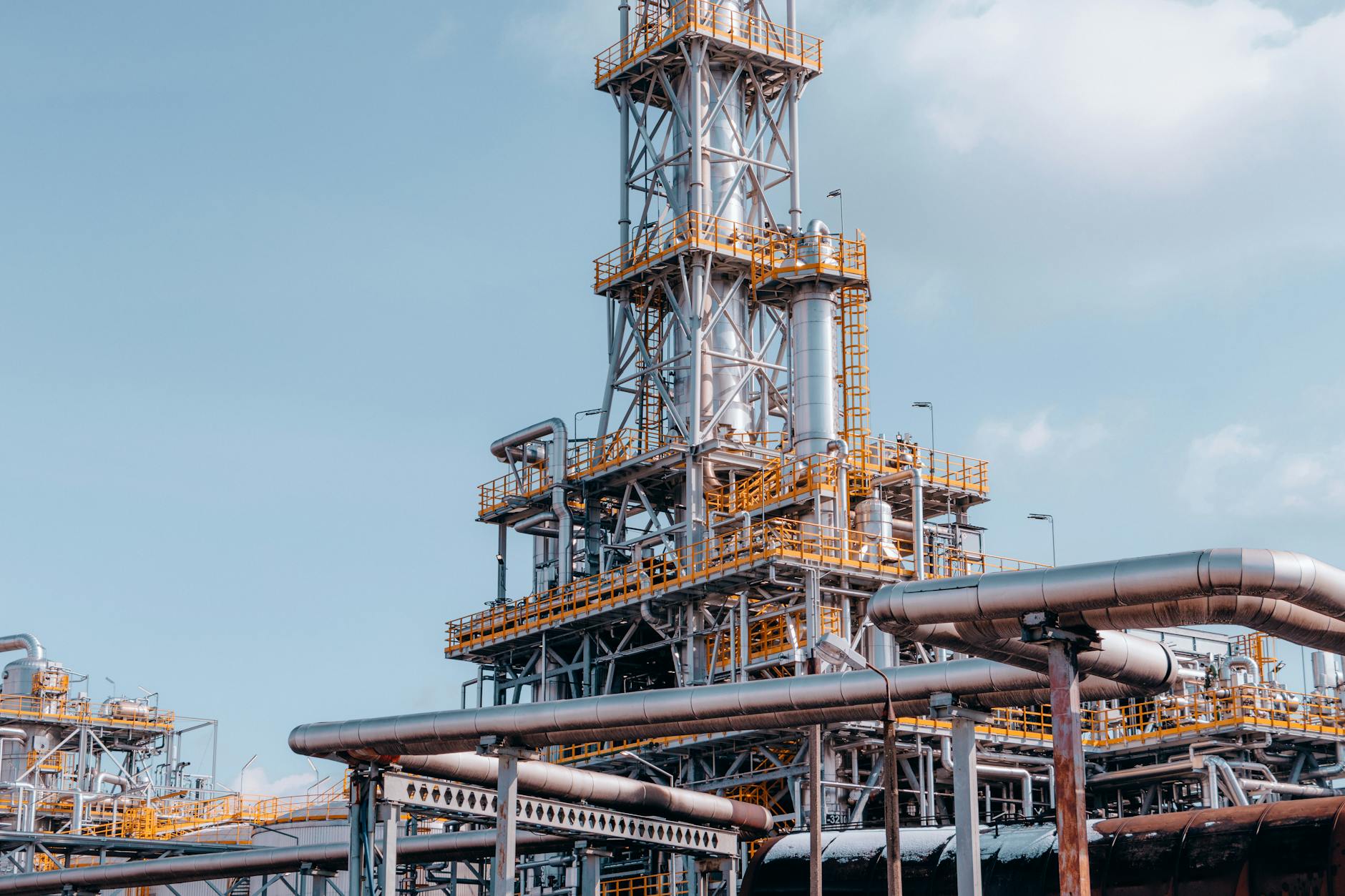
The Texaco Lawrenceville refinery is located in Lawrence County in southeastern Illinois, a region built on petroleum production. The facility processed crude oil from Illinois basin fields and produced gasoline, fuel oils, and related petroleum products through extensive piping systems, heat exchangers, distillation columns, boilers, and storage tanks.
The facility employed both a permanent workforce and rotating union contractor labor, including members of Heat and Frost Insulators Local 1 (St. Louis, MO), Plumbers and Pipefitters UA Local 562 (St. Louis, MO), and affiliated chapters.
Why This Facility Generates Complex Asbestos Claims
A refinery of this scale ran asbestos-containing materials through virtually every system—pipe insulation, boiler lagging, vessel covering, gaskets, packing, refractory. Workers from multiple trades and multiple contractors may have been exposed to the same products in the same spaces during overlapping periods. Establishing that exposure history requires detailed intake, union records, co-worker affidavits, and product identification work that takes time to build. Starting that process now—while witnesses are still available—makes the difference between a strong claim and a marginal one.
Three Reasons Refineries Were Saturated with Asbestos
1. The Heat Problem
Petroleum refining runs hot. Crude oil distillation, catalytic cracking, and hydrotreatment processes reach temperatures from several hundred to over one thousand degrees Fahrenheit. High-pressure steam systems run throughout every facility.
Asbestos handled those conditions. Thermobestos pipe covering (Johns-Manville), Kaylo insulation (Johns-Manville), and Aircell block insulation (Owens Corning) were engineered and marketed specifically for high-temperature industrial applications. Their manufacturers knew exactly where these products went and who handled them.
2. The Cost Calculation
From the 1930s through the mid-1970s, asbestos-containing insulation cost less than mineral wool, fiberglass, or calcium silicate alternatives. For a major refinery with miles of process piping, dozens of large vessels, and multiple boiler systems, that price differential was decisive.
Refinery operators bought asbestos products. Manufacturers including Johns-Manville, Celotex, and Combustion Engineering sold them—while internal documents show these companies understood the health consequences and said nothing. That documented knowledge supports claims for punitive damages.
3. No Regulation Until the 1970s
OSHA established permissible exposure limits for asbestos in 1972. EPA began regulating it as a hazardous air pollutant around the same time. Before those regulations took effect:
- Insulation workers mixed asbestos cements by hand on open job sites
- Pipefitters cut Garlock compressed sheet gaskets on the shop floor
- Maintenance crews swept Monokote and Unibestos debris without respirators
Internal documents produced in litigation against Johns-Manville, Owens Corning, Armstrong World Industries, Celotex, and Garlock show these companies knew about asbestos health hazards as early as the 1930s and 1940s. That evidence has driven punitive damages claims and supported negotiations for decades.
When Asbestos Was Used at Lawrenceville: Establishing Your Exposure Window
1930s–1950s: Original Construction and Major Expansion
Workers who participated in original construction or early maintenance at the facility may have taken the heaviest lifetime doses. Pipe insulation, boiler lagging, and vessel insulation during this period almost certainly contained Thermobestos, Kaylo, and Aircell—products manufactured by Johns-Manville and Owens Corning containing chrysotile, amosite, or crocidolite asbestos.
Heat and Frost Insulators Local 1 and Plumbers and Pipefitters UA Local 562 contractors are alleged to have performed significant portions of this work. If this describes your career history, your exposure record is particularly well-documented.
1950s–1960s: Ongoing Maintenance and Incremental Expansion
Routine repairs exposed workers to both intact and deteriorating asbestos insulation from Johns-Manville, Eagle-Picher, Celotex, and Combustion Engineering. Aged Kaylo, Thermobestos, and Monokote released friable fibers at elevated concentrations. Maintenance workers who may have been exposed during these repair cycles have developed mesothelioma decades later—a pattern documented consistently in litigation records.
1960s–1970s: Turnaround and Stripping Work
Asbestos products from Johns-Manville, Armstrong World Industries, Unibestos, and Cranite reportedly remained in widespread use at industrial facilities during this period despite growing awareness of their hazards. Turnaround workers—insulators and pipefitters from Heat and Frost Insulators Local 1 and UA Local 562—are alleged to have stripped and reinsulated massive quantities of damaged asbestos-containing material.
Stripping generates the highest airborne fiber concentrations of any refinery work activity. If you performed turnaround or stripping work, that work history is central to your claim.
Post-1970s: Legacy Asbestos
In-place asbestos from Johns-Manville, Owens Corning, Celotex, Armstrong, and others remained in the facility after regulatory changes. Workers who disturbed, repaired, or removed that legacy material during turnaround cycles through the 1980s and beyond may have continued accumulating exposure long after the industry’s peak asbestos use.
Asbestos Products Used at the Lawrenceville Refinery
Your claim is product-specific. Liability attaches to the manufacturers who made and sold the products—not simply to the refinery operator. Write down every product name you remember seeing, handling, or working around. That recall is the foundation of your attorney’s liability analysis when pursuing compensation and direct litigation claims.
Pipe Covering and Thermal Insulation
Pipe insulation was the single most prevalent asbestos-containing material at any petroleum refinery. Manufacturers produced it as pre-formed half-sections and full sections, and as wet-mixed insulating cement applied directly to pipe surfaces.
Manufacturers and products allegedly used at or supplied to this facility:
- Armstrong World Industries — boiler insulation and pipe covering
- Celotex Corporation — pipe insulation and block products
- Combustion Engineering — boiler and pipe insulation systems
- Eagle-Picher Industries — industrial pipe insulation
- Fibreboard Corporation — asbestos pipe covering
- GAF Corporation — industrial insulation products
- Johns Manville Corporation — Thermobestos and Kaylo pipe covering (among the most heavily litigated products in refinery cases)
- Keene Corporation — pipe and equipment insulation
- National Gypsum Company — insulation products
- Owens Corning Fiberglas — Aircell and asbestos-containing thermal products
- Philip Carey Manufacturing Company — pipe and vessel insulation
- Unarco Industries — industrial insulation products
- Georgia-Pacific — pipe covering and insulation products
- W.R. Grace — specialty insulation products
Insulating Cement and Finishing Cement
Insulators mixed asbestos cements with water on the job site. Mixing generated heavy airborne asbestos dust. Union insulators from Heat and Frost Insulators Local 1 (St. Louis) and Local 27 (Kansas City) are alleged to have mixed these products routinely, accumulating significant exposure over the course of their careers.
Products and manufacturers reportedly used at this facility:
- Monokote (Philip Carey/Celotex) — spray-applied and trowel-applied fireproofing
- Johns Manville insulating cement — wet-mixed application product
- Pabco insulating cement (Fibreboard) — trowel-applied pipe covering cement
- Sil-O-Cel products (Johns-Manville) — siliceous insulating materials
- Superex products — high-temperature insulating cements
- Unibestos products — asbestos-containing cements and coatings
- Gold Bond products (National Gypsum) — joint compounds and fireproofing materials
Gaskets and Packing
High-temperature, high-pressure process conditions required asbestos-containing compressed sheet gaskets and spiral-wound gaskets throughout every valve and flange connection in the facility. Pipefitters who cut gaskets from bulk sheet stock generated concentrated asbestos dust at the cut line—a short, repeated exposure that accumulates into a significant lifetime dose.
Pipefitters from UA Local 562 (St. Louis) and UA Local 268 (Kansas City) are alleged to have taken these exposures during every valve replacement and maintenance cycle. Gasket-cutting is one of the highest-exposure activities documented in refinery litigation.
Manufacturers:
- A.W. Chesterton Company — mechanical seals and packing
- Crane Co. — industrial valves with asbestos packing
- Flexitallic Gasket Company — spiral-wound gaskets with asbestos filler
- Garlock Inc. (Garlock Sealing Technologies) —
Litigation Landscape
Asbestos litigation arising from oil refinery operations has historically involved manufacturers of pipe insulation, valve covers, gaskets, and thermal products commonly used in petrochemical facilities. Primary defendants in documented refinery asbestos cases have included Johns-Manville, Combustion Engineering, Crane Co., W.R. Grace, Garlock, Armstrong, Babcock & Wilcox, and Eagle-Picher—companies that supplied insulation and sealing materials to industrial plants during the mid-20th century.
Workers exposed at facilities such as the Texaco Lawrenceville refinery may pursue claims through multiple asbestos bankruptcy trust funds established by these manufacturers. The Johns-Manville Settlement Trust, Combustion Engineering Trust, Crane Co. Trust, W.R. Grace Trust, Garlock Sealing Technologies Trust, Armstrong Trust, Babcock & Wilcox Trust, and Eagle-Picher Trust have collectively paid thousands of claims from refinery workers nationwide. Each trust maintains its own claim procedures, documentation requirements, and payment schedules; eligible claimants can typically file with multiple trusts based on exposure history.
Publicly filed litigation from oil refinery workers demonstrates that claims arising from pipe covering, insulation installation, maintenance, and removal work have been regularly documented. These cases often focus on occupational exposure during routine maintenance, shutdown procedures, and asbestos-containing product disturbance within high-temperature operational environments.
Workers who believe they were exposed to asbestos at the Texaco Lawrenceville facility and have since developed mesothelioma, lung cancer, or asbestosis should contact an experienced Missouri asbestos attorney to evaluate eligibility for trust fund claims and potential litigation.
Recent News & Developments
No recent facility-specific news articles, OSHA citations, or EPA enforcement actions appear in publicly available records specifically naming the Texaco Oil Refinery in Lawrenceville, Illinois in connection with asbestos abatement, demolition activity, or regulatory violations. However, the broader public record — including historical refinery operations, industry litigation patterns, and federal regulatory activity — provides meaningful context for former workers and their families.
Operational History and Exposure Context
The Lawrenceville refinery, which processed crude oil from the Illinois Basin over much of the twentieth century, relied heavily on insulated pipe systems, heat exchangers, boilers, and process vessels throughout its operational life. Facilities of this type and era routinely incorporated asbestos-containing pipe covering, block insulation, and gasket materials supplied by manufacturers including Johns-Manville, Owens-Corning, Armstrong World Industries, and Carey-Canada. Maintenance shutdowns, known in the refining industry as “turnarounds,” are historically documented as periods of concentrated asbestos exposure, as insulators, pipefitters, and laborers removed and reapplied thermal insulation while working in confined, poorly ventilated spaces.
Regulatory Landscape
Under EPA regulations at 40 CFR Part 61, Subpart M (National Emission Standards for Hazardous Air Pollutants), any demolition or renovation of a facility containing regulated asbestos-containing material requires advance notification to the appropriate state agency and adherence to strict work practice standards. Illinois Environmental Protection Agency oversight would apply to any decommissioning or structural work at the Lawrenceville site. Similarly, OSHA’s construction standard at 29 CFR 1926.1101 and general industry standard at 29 CFR 1910.1001 govern asbestos handling during maintenance and renovation operations at petroleum facilities.
Litigation Context
While no publicly reported verdicts or settlements have been identified that name the Lawrenceville refinery as a specific defendant facility in accessible court records, Texaco, Inc. and its successor entities have appeared in asbestos-related litigation in multiple jurisdictions. Former refinery workers across the petroleum industry have successfully pursued claims against both facility operators and product manufacturers whose insulation materials were specified for use in refinery environments. Pipe covering manufactured by companies such as Johns-Manville and distributed through regional supply networks serving the Illinois refining corridor has been identified in discovery records in related cases.
Demolition and Decommissioning
Any future or ongoing decommissioning activity at the Lawrenceville site would trigger mandatory NESHAP notification requirements and, depending on the quantity of regulated material identified during pre-demolition surveys, could result in public notice filings with the Illinois EPA. Researchers and claimants seeking facility-specific abatement records may submit Freedom of Information Act requests to both the Illinois EPA and the federal EPA Region 5 office in Chicago.
Workers or former employees of Texaco Oil Refinery Lawrenceville Illinois asbestos pipe covering who were diagnosed with mesothelioma, lung cancer, or asbestosis may have legal rights under Missouri law. Missouri § 537.046 extends the civil filing window for occupational disease claims.
For informational purposes only. Not legal advice. No attorney-client relationship is created by reading this page. © 2026 Rights Watch Media Group LLC — Disclaimer · Privacy · Terms · Copyright
