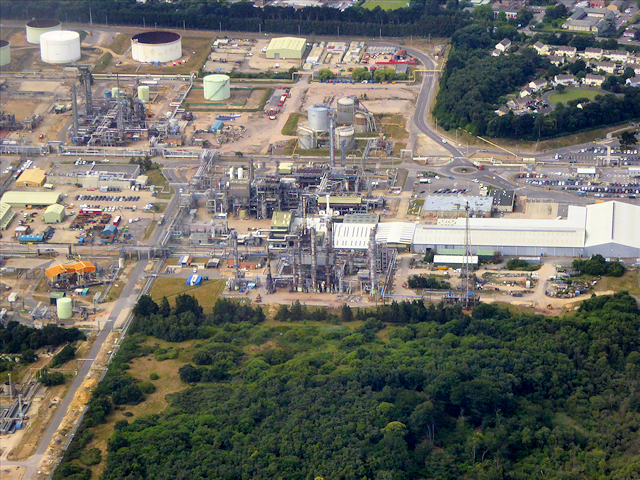
Illinois Law Applies to This Jobsite — Act Immediately
This facility is located in Illinois. Asbestos exposure claims arising from work at Illinois jobsites are governed by Illinois law, not Missouri law. Illinois’s statute of limitations for asbestos personal injury claims is 2 years from the date of diagnosis under 735 ILCS 5/13-202 — significantly shorter than Missouri’s 5-year deadline under §516.120.
Missouri residents who worked at this Illinois facility may have claims subject to both Illinois and Missouri law depending on where exposure occurred and which compensation avenue is pursued. Illinois court claims run on the Illinois five-year deadline. Asbestos bankruptcy trust claims run on separate internal trust deadlines. Do not assume Missouri’s 5-year window applies — if you have been diagnosed, consult an attorney who practices in both states immediately.
Shell Oil Roxana Refinery and Clark Refinery Asbestos Claims: A Legal Guide for Missouri Workers
Source note: Products, equipment, and companies identified in this article are drawn from public asbestos litigation records, court filings, EPA and OSHA regulatory databases, and publicly available industry records. Product identifications and company references reflect what has been alleged or documented in publicly filed litigation. This article does not constitute a finding of liability against any company.
⚠️ CRITICAL DEADLINE WARNING FOR MISSOURI WORKERS
Missouri’s current statute of limitations for mesothelioma and asbestos disease claims is 5 years from the date of your medical diagnosis under § 516.120 RSMo. That clock started running the day your doctor confirmed your diagnosis — not the day you last set foot in a refinery.
That 5-year window is under direct legislative threat right now.
**Missouri If signed into law, your deadline drops from 5 years to 3 years — immediately and permanently. No grace period. No grandfathering. Workers diagnosed today under a 5-year window could wake up tomorrow under a 3-year window with no warning and no remedy.
Miss the deadline — under current law or under HB 1664 if it passes — and your right to compensation is gone. No exceptions. No extensions. No second chances.
Even with 5 years on the clock today, waiting kills cases. Witnesses in their 70s and 80s die before depositions can be taken. Employment records vanish when plants close. Building a mesothelioma case means identifying dozens of manufacturers and jobsites across decades of work history. Claims against more than 60 asbestos bankruptcy trusts each require separate processes and documentation.
Call a Missouri mesothelioma attorney today. Not next month. Today.
Workers who spent years at the Shell Oil Roxana Refinery or the Clark Refinery in Wood River, Illinois are now being diagnosed with mesothelioma, asbestosis, and asbestos-related lung cancer. The exposure may be associated with the development of asbestos-related diseases happened decades ago — in the pipes, boilers, steam systems, and electrical equipment of facilities that ran continuously from the 1940s through the 1980s. Johns-Manville, Owens-Illinois, W.R. Grace, and other manufacturers are alleged in asbestos litigation to have had knowledge of the health risks. Workers are alleged in asbestos litigation to have never been adequately warned.
If you’ve just been diagnosed and you’re searching for a mesothelioma lawyer in Missouri or an asbestos attorney in Missouri, legal options still exist — but the window is actively closing. Missouri’s current statute of limitations is 5 years under § 516.120 RSMo, measured from the date of medical diagnosis. **Missouri Illinois maintains a five-year statute of limitations running from diagnosis or discovery. Workers who lived or worked in the Mississippi River industrial corridor need to act before those windows close — and before HB 1664 makes Missouri’s window dramatically shorter overnight.
What Were the Roxana Refinery and Clark Refinery?
Shell Oil operated the Roxana Refinery in Wood River, Illinois — one of the largest petroleum refining operations in the Midwest. Clark Refinery operated an adjacent facility in the same Wood River industrial corridor. These facilities:
- Operated continuously from the 1940s through at least the 1980s
- Employed hundreds of skilled tradespeople including pipefitters, boilermakers, insulators, and electricians represented by Heat and Frost Insulators Local 1 out of St. Louis, Plumbers and Pipefitters UA Local 562, and Boilermakers Local 27
- Processed crude petroleum into refined fuels and industrial chemical feedstocks
- Required extensive heat management, pressure containment, and mechanical infrastructure across sprawling pipe networks, distillation units, and boiler systems
Both facilities operated squarely within the period — roughly 1935 through 1975 — when asbestos use in American industrial facilities peaked.
Wood River sits directly across the Mississippi River from St. Louis. The Roxana and Clark refineries were part of a continuous industrial corridor that extended from St. Louis north through Madison County and into the broader Illinois industrial basin. Missouri workers — many of them members of Heat and Frost Insulators Local 1, UA Local 562, and Boilermakers Local 27, all headquartered in St. Louis — crossed the river daily to work these facilities. Many of those same tradespeople also worked Missouri-side facilities: the Labadie and Portage des Sioux power plants, Monsanto’s chemical complex in St. Louis, and Granite City Steel — stacking asbestos exposures on both sides of the river across entire careers.
**Every one of those Missouri workers has a 5-year deadline running from their diagnosis date under § 516.120 RSMo. Missouri **
Why Asbestos Was Used at These Refineries
Refinery operations demanded materials that could withstand extreme heat, resist chemical corrosion, and insulate equipment running continuously at high temperatures and pressures. Asbestos was the industrial answer. Johns-Manville, Owens Corning, Eagle-Picher, Armstrong World Industries, W.R. Grace, and Crane Co. all supplied asbestos-containing products to petroleum refining facilities throughout this era.
Asbestos-containing materials were present throughout both the Roxana Refinery and the Clark Refinery, including:
- Pipe insulation and pipe covering — Owens-Illinois Kaylo and Eagle-Picher Thermobestos on steam and process lines
- Block insulation around reactors, distillation columns, and heat exchangers — including Johns-Manville Aircell block insulation
- Insulating cements and refractory materials — W.R. Grace Monokote and Eagle-Picher Thermobestos cement in boilers and furnaces
- Gaskets and valve packing — Garlock Sealing Technologies compressed asbestos sheet gaskets and Cranite packing throughout piping systems
- Electrical insulation inside motors, switchgear, and turbine components manufactured by Combustion Engineering
- Friction materials in industrial machinery and mobile equipment
- Talc products used in equipment maintenance and refinery operations, including Georgia-Pacific Gold Bond industrial talc
Manufacturers who supplied asbestos-containing products to industrial facilities throughout this corridor have been alleged in publicly filed asbestos litigation to have failed to adequately warn workers of health risks. The pipefitters, boilermakers, and insulators on the floor are now facing a filing deadline that is either already running or about to get dramatically shorter.
How Missouri Workers Were Exposed
Missouri workers who crossed the river to work at Wood River refineries often accumulated asbestos exposures at multiple facilities across entire careers — stacking exposures from Wood River onto exposures from Missouri-side power plants, chemical facilities, and steel mills. The industrial corridor connecting St. Louis to Madison County was among the most asbestos-intensive work environments in the American Midwest during the peak exposure era.
What made refinery asbestos exposure particularly lethal was its invisibility. Workers could not see the fibers they inhaled while cutting pipe insulation, breaking gasket seals, or mixing insulating cement by hand. Fibers inhaled in 1962 can cause mesothelioma diagnosed in 2024. That 40-to-60-year latency period is exactly why Missouri workers are receiving diagnoses today for exposures that happened a working lifetime ago.
The first question an experienced toxic tort attorney will ask is not just where you worked — but every facility, every trade, every product you can remember across your entire career. That answer determines which defendants can be named, which asbestos trust funds can be accessed, and whether claims should be filed in Missouri, Illinois, or both.
The Hidden Danger of Talc Products at These Facilities
Public litigation records and environmental database documentation indicates that talc products — specifically Georgia-Pacific Gold Bond industrial talc — were among the documented asbestos-containing materials present at the Roxana Refinery and Clark Refinery in Wood River.
Industrial talc used during the mid-twentieth century was routinely contaminated with asbestos minerals, particularly tremolite and anthophyllite asbestos. Talc and asbestos form in the same geological environments and occupy the same ore deposits — contamination of talc with asbestos fibers has been documented in publicly filed scientific and litigation records. Georgia-Pacific’s Gold Bond talc has been the subject of extensive asbestos litigation in Madison County, Illinois and St. Louis City Circuit Court, with plaintiffs alleging that talc contamination was not disclosed to workers who handled the product.
At petroleum refineries like the Roxana and Clark facilities, talc was used as:
- A mold release agent in gasket fabrication
- A filler and lubricant in industrial processes
- A maintenance material applied to equipment surfaces and mechanical components
Workers who poured, mixed, or cleaned up bulk Georgia-Pacific Gold Bond talc — or worked near areas where it was applied — inhaled asbestos-contaminated dust with every breath. Plaintiffs in asbestos litigation have alleged that talc contamination was not disclosed to workers. The workers on the refinery floor received no warning.
If you or a family member worked with Georgia-Pacific Gold Bond talc at either facility and have been diagnosed with mesothelioma or asbestos-related cancer, Missouri’s 5-year statute of limitations is running from the date of that diagnosis. Missouri Contact a Missouri asbestos attorney today.
Which Occupations Carried the Highest Exposure Risk
At the Roxana and Clark refineries, the workers who handled asbestos-containing materials most directly — and who now carry the highest rates of mesothelioma and asbestos disease — were the trades that installed, maintained, repaired, and demolished insulated equipment:
Litigation Landscape
Chemical manufacturing facilities of Shell Chemical’s era and scale relied extensively on asbestos-containing insulation, gaskets, valves, and thermal protection systems. Documented asbestos litigation arising from similar facilities has identified several manufacturers as frequent defendants, including Combustion Engineering, Babcock & Wilcox, Crane Co., W.R. Grace, Garlock, Armstrong Industries, and Johns-Manville. These companies supplied equipment, piping components, and insulation products integral to petrochemical operations.
Workers exposed at East St. Louis–era chemical plants may have claims against multiple bankruptcy trust funds established by these manufacturers. The Combustion Engineering asbestos trust, Babcock & Wilcox trust, Crane Co. trust, W.R. Grace trust, Garlock Sealing Technologies trust, Armstrong Building Products trust, and Johns-Manville trust are among the most relevant and accessible sources of compensation for exposed workers. Each trust maintains specific claim procedures and eligibility criteria based on the claimant’s exposure history and diagnosis.
Litigation patterns for chemical manufacturing facilities show that workers developed mesothelioma, lung cancer, and asbestosis through inhalation of asbestos fibers released during equipment maintenance, thermal system repair, and routine operations. Publicly filed litigation documents the prevalence of these claims among chemical plant workers across multiple jurisdictions.
Missouri workers who handled insulation, maintained equipment, or worked near thermal systems at Shell Chemical East St. Louis may have significant claims. The five-year statute of limitations underscores the importance of prompt action. Affected workers should contact an experienced Missouri mesothelioma attorney to evaluate exposure history, identify applicable trust funds, and pursue compensation.
Recent News & Developments
No facility-specific news articles, regulatory enforcement actions, or publicly reported litigation records tied exclusively to the Shell Chemical plant in East St. Louis, Illinois appear in current public databases or recent news archives. However, the absence of discrete headline events does not indicate an absence of regulatory oversight or historical asbestos hazard at this type of industrial chemical facility.
Regulatory Landscape for Similar Facilities
Large petrochemical complexes such as the Shell Chemical East St. Louis site operated during an era when asbestos-containing materials were standard components in pipe insulation, boiler lagging, heat exchangers, valve packing, pump seals, and fireproofing applications. Facilities of this class remain subject to the National Emission Standards for Hazardous Air Pollutants (NESHAP) governing asbestos, codified at 40 CFR Part 61, Subparts A and M. These regulations mandate written notification to the EPA before any demolition or renovation activity that may disturb regulated asbestos-containing material (RACM) above threshold quantities. Any structural modifications, unit shutdowns, or decommissioning phases at the East St. Louis plant would have triggered these federal notification and work-practice requirements.
OSHA Oversight
Workers performing maintenance, turnaround, or repair activities at chemical processing facilities are covered under OSHA’s construction-standard asbestos rule, 29 CFR 1926.1101, and the general industry standard at 29 CFR 1910.1001. These rules establish permissible exposure limits, require air monitoring, and mandate protective equipment during disturbance of insulation or other asbestos-containing materials — all tasks routinely encountered in the chemical plant environment.
Product Identification Context
Petrochemical plants constructed or expanded between the 1940s and 1980s routinely incorporated insulation and fireproofing products manufactured by companies including Johns-Manville, Owens-Illinois, Combustion Engineering, Babcock & Wilcox, Armstrong World Industries, and W.R. Grace. Pipe insulation, block insulation on reactors and vessels, refractory cements, and asbestos rope gaskets from these manufacturers were widely distributed throughout Gulf Coast and Midwest chemical facilities. Former workers, insulators, pipefitters, and maintenance contractors at the East St. Louis Shell Chemical site may have encountered products from one or more of these manufacturers during the plant’s operational history.
Litigation Context
While no publicly reported verdicts or settlements naming this specific facility have been identified in accessible court records, asbestos personal injury claims involving Shell Oil Company and its chemical subsidiaries have appeared in state and federal dockets across multiple jurisdictions. Co-defendant product manufacturers and insulation contractors have been named in related proceedings arising from similar Midwest industrial sites.
Workers or former employees of Shell Chemical East St. Louis Illinois who were diagnosed with mesothelioma, lung cancer, or asbestosis may have legal rights under Missouri law. Missouri § 537.046 extends the civil filing window for occupational disease claims.
For informational purposes only. Not legal advice. No attorney-client relationship is created by reading this page. © 2026 Rights Watch Media Group LLC — Disclaimer · Privacy · Terms · Copyright
