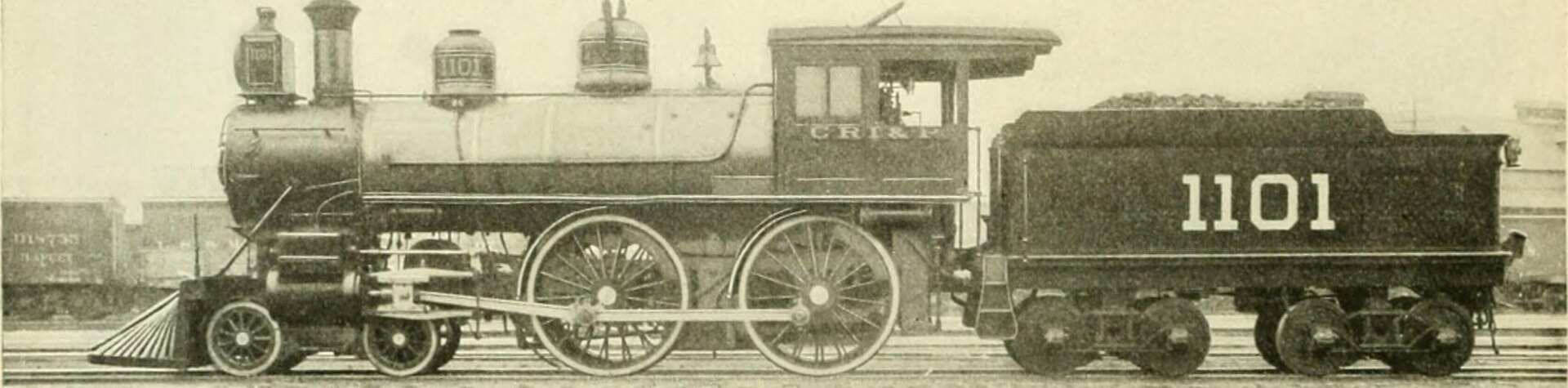
Mesothelioma Lawyer Missouri: Asbestos Attorney for Rock Island Railroad Workers


Your Filing Deadline Is Already Running

If you or a loved one have been diagnosed with mesothelioma, asbestosis, or another asbestos-related illness connected to Rock Island Railroad work, Missouri’s 5-year statute of limitations under Mo. Rev. Stat. § 516.120 started running on the date of diagnosis — not the date of exposure. Every day you wait is a day you cannot get back. Call today to speak with an experienced Missouri asbestos attorney about your options before that window closes.


What Former Rock Island Employees Need to Know

For decades, workers at Rock Island Railroad locomotive shops across Illinois were exposed to asbestos without warning. The Chicago, Rock Island and Pacific Railroad and manufacturers including Johns-Manville Corporation, Owens Corning/Owens-Illinois, Armstrong World Industries, W.R. Grace and Company, Garlock Sealing Technologies, Eagle-Picher Industries, Crane Co., Georgia-Pacific, and Celotex Corporation knew the health risks — and allegedly concealed them.

If you are a former Rock Island employee or family member facing mesothelioma, asbestosis, lung cancer, or another asbestos-related disease, you have legal options. Thousands of railroad workers have already recovered substantial settlements and verdicts. This guide explains where exposure occurred, which products were involved, and how to pursue compensation in Missouri.


Part One: The Rock Island Railroad and Its Illinois Asbestos Exposure Sites

A Railroad at the Heart of the Midwest

The Chicago, Rock Island and Pacific Railroad was one of the most historically significant railroads in American history. Chartered in Illinois in 1847, it became the first railroad to bridge the Mississippi River when it completed its span to Davenport, Iowa in 1856. By the twentieth century, the Rock Island operated more than 7,500 miles of track stretching from Chicago west to Colorado and New Mexico and south through Kansas, Oklahoma, and Texas.

Illinois was the administrative and operational heart of the Rock Island system. The railroad’s general offices were headquartered in Chicago, and its primary heavy maintenance and repair operations were concentrated at several major Illinois facilities that employed thousands of skilled tradespeople throughout the railroad’s operational life.

Major Asbestos Exposure Sites at Rock Island Railroad Illinois Facilities

Joliet Locomotive Shops — The Primary Exposure Facility

The Joliet Locomotive Shops in Joliet, Will County, Illinois served as the Rock Island Railroad’s primary heavy maintenance and overhaul center for much of the twentieth century. This facility represents the most heavily documented asbestos exposure location associated with the Rock Island in Illinois.

Operations at Joliet included:

  • Complete locomotive overhauls and rebuilds involving removal of Johns-Manville Kaylo insulation blocks and Owens-Illinois Kaylo pipe coverings
  • Boiler repair and replacement on steam locomotives using Armstrong World Industries asbestos cement and W.R. Grace Monokote thermal barriers
  • Diesel locomotive maintenance and component overhaul with Garlock Sealing Technologies gasket materials
  • Pipe system repair and replacement requiring removal of Philip Carey magnesia-asbestos pipe insulation and installation of Thermobestos-brand covering systems
  • Electrical system work involving Aircell insulation products manufactured by Johns-Manville
  • Brake system maintenance utilizing Abex Corporation asbestos-containing brake shoes and Federal-Mogul friction linings
  • Wheel and axle work in environments contaminated by airborne asbestos fibers from concurrent operations

Locomotive overhaul work meant workers disturbed, cut, sanded, removed, and replaced asbestos-containing materials daily. Workers in virtually every skilled trade encountered asbestos regularly at this facility.

Workers belonging to Heat and Frost Insulators Local 1 (St. Louis, MO) and Plumbers and Pipefitters UA Local 562 (St. Louis, MO) regularly rotated through Joliet facilities for specialized assignment work.

Chicago Area Facilities

Englewood Yards on Chicago’s South Side and terminal maintenance facilities associated with the Rock Island’s Chicago commuter operations handled regular maintenance work involving routine contact with asbestos-containing materials, including:

  • Insulation on steam lines using Johns-Manville Unibestos-branded products
  • Gaskets and packing materials manufactured by Garlock Sealing Technologies and Crane Co.
  • Brake components containing Abex friction materials and Federal-Mogul asbestos linings
  • Electrical insulation and barriers utilizing Owens Corning fiberglass products with asbestos binders

The Rock Island operated an extensive Chicago commuter rail service for decades. Maintenance requirements for that operation meant shop workers in the Chicago area faced exposure patterns similar to those at Joliet, though often in smaller facilities with less ventilation.

Silvis Locomotive Shops

The Rock Island maintained repair and maintenance facilities at Silvis, Illinois in Rock Island County along the Mississippi River. The Silvis facility served locomotives operating on the railroad’s Iowa and western divisions. Workers there may have been exposed to the same categories of asbestos-containing materials found at the Joliet shops, including:

  • Johns-Manville Kaylo boiler insulation blocks
  • Armstrong World Industries pipe insulation and Superex-brand thermal products
  • Garlock gasket materials and rope packing
  • Crane Co. mechanical seals containing chrysotile asbestos
  • Abex brake shoe friction materials

The railroad used consistent material specifications across its maintenance operations. Workers transferred between facilities carried the same exposure profiles from site to site.

Blue Island Coach and Car Shops

The Rock Island’s Blue Island, Illinois operations included coach and car repair facilities focused on passenger and freight car maintenance. These facilities generated asbestos exposure through work on:

  • Asbestos-containing ceiling and floor materials in passenger cars, including Gold Bond brand thermal barriers and Sheetrock products with asbestos additives
  • Pipe insulation within passenger cars utilizing Johns-Manville products and W.R. Grace thermal barriers
  • Brake systems containing Abex asbestos friction materials and Lockheed-Stueart asbestos brake linings
  • Electrical components containing Pabco-brand asbestos insulation

Part Two: Why Asbestos Saturated Rock Island Railroad Facilities

The Physical Properties That Made Asbestos Seemingly Indispensable

Asbestos is a naturally occurring silicate mineral that exists in several fibrous forms, including chrysotile (white asbestos), amosite (brown asbestos), and crocidolite (blue asbestos). For the railroad industry, asbestos possessed a combination of properties that made it nearly impossible to replace with available alternatives at the time:

  • Extreme heat resistance: Does not burn; does not conduct heat effectively
  • Tensile strength: Remarkably strong for its weight
  • Chemical resistance: Resists degradation from oils, chemicals, and steam
  • Acoustic dampening: Reduces noise transmission
  • Electrical insulation: Non-conductive
  • Low cost: Inexpensive to mine and manufacture into finished products

For a railroad operating steam locomotives with firebox and boiler temperatures exceeding 1,000 degrees Fahrenheit, asbestos was cheap, effective, and aggressively marketed by Johns-Manville, Owens Corning/Owens-Illinois, W.R. Grace and Company, Armstrong World Industries, Georgia-Pacific, and Celotex Corporation directly to Rock Island purchasing departments.

The Manufacturers and the Railroad Knew the Dangers

The controlling legal issue: Asbestos product manufacturers and railroad management allegedly knew of asbestos health dangers far earlier than they ever warned the workers doing the actual exposure work.

Evidence of known danger:

  • Medical literature documenting asbestos-related disease in workers dates to the late 1800s
  • By the 1930s, insurance companies were refusing to write health and life insurance policies for asbestos workers because actuarial risk was too well established to ignore
  • Internal corporate documents from Johns-Manville Corporation, Owens Corning, W.R. Grace and Company, Armstrong World Industries, and Eagle-Picher Industries — produced in litigation over four decades — allegedly demonstrate that these companies knew their products caused fatal lung disease and made deliberate decisions to suppress that information rather than warn workers
  • The Surgeon General’s public health warnings regarding asbestos in 1973 came decades after manufacturers already possessed internal scientific evidence of mesothelioma risk

Specific manufacturer admissions and documented knowledge:

  • Johns-Manville Corporation: Internal memos from the 1930s–1960s disclosed to plaintiffs in Borel v. Fibreboard Products Manufacturing Co. and subsequent litigation are alleged to show that Johns-Manville knew of asbestos dangers while marketing Kaylo insulation blocks, Unibestos pipe covering, Aircell insulation, and other products to railroads
  • Owens Corning/Owens-Illinois: Reportedly knew of mesothelioma risk from chrysotile asbestos used in Kaylo products while actively marketing to railroad industry purchasers
  • W.R. Grace and Company: Internal documents reportedly show knowledge of asbestos health hazards while manufacturing thermal barriers and insulation products distributed to railroads nationwide
  • Armstrong World Industries: Documented knowledge of asbestos disease risk is alleged while the company was producing pipe insulation, Superex thermal products, and asbestos cement marketed to rail maintenance operations
  • Eagle-Picher Industries: Allegedly manufactured asbestos-containing products while possessing internal knowledge of occupational disease risk

For Rock Island railroad workers at the Joliet Locomotive Shops, Silvis facility, Blue Island shops, and Chicago-area yards, this alleged concealment carried fatal consequences. Workers who might have taken protective measures — or chosen different careers entirely — were instead exposed to asbestos fibers for entire working lifetimes, often receiving no warning whatsoever until symptoms of serious disease appeared decades later.


Part Three: Specific Asbestos-Containing Products at Rock Island Locomotive Shops

Thermal Insulation on Steam Locomotives

Steam locomotives were, in functional terms, enormous asbestos delivery systems. The need to contain extreme heat throughout the steam-generating and distribution systems resulted in asbestos insulation being applied to virtually every surface involved in steam generation or distribution.

Boiler Insulation — The Largest Asbestos Application

Boiler insulation was the single largest category of asbestos material at the locomotive shops. Steam locomotive boilers operated at temperatures and pressures that required substantial insulation both for efficiency and to protect workers from burn injuries.

Boiler insulation products included:

  • Johns-Manville Kaylo asbestos block insulation: Pre-formed blocks of compressed chrysotile asbestos manufactured by Johns-Manville under the “Kaylo” trade name
  • Owens-Illinois Kaylo asbestos pipe covering: Pre-formed molded asbestos sections applied to steam pipes
  • Owens Corning asbestos products: Competing thermal insulation products marketed to Rock Island purchasing departments
  • Unarco Industries asbestos block insulation: Alternative supplier of compressed asbestos insulation blocks
  • Armstrong World Industries asbestos pipe covering: Molded asbestos sections applied to steam pipes with asbestos cement binders
  • W.R. Grace Monokote thermal barriers: Spray-applied asbestos insulation coating used on boiler exteriors and irregular surfaces
  • Johns-Manville asbestos cement: Used to coat insulation, fill gaps, and create smooth surfaces on boiler components
  • Zonolite Company asbestos mud and plaster: Later acquired by W.R. Grace; applied wet and dried in place over pipe and boiler insulation

The exposure process: When locomotives arrived at the Joliet Locomotive Shops for overhaul, workers belonging to Heat and Frost Insulators Local 1 tore off old Johns-Manville Kaylo insulation using hand tools, generating dense clouds of asbestos dust. Historical photographs from comparable railroad facilities show work environments so thick with asbestos dust that visibility was substantially reduced. Workers removed hundreds of pounds of accumulated asbestos insulation per locomotive during complete overhauls — without respirators, without warnings, and without any meaningful protection.

Pipe Insulation and Covering Systems

The steam distribution systems on both steam and early diesel locomotives involved extensive pipe networks requiring insulation to maintain temperature and efficiency.

Pipe insulation products used at Rock Island facilities included:

  • Philip Carey magnesia-asbestos pipe covering: Pre-formed half-round sections containing chrysotile asbestos bound with magnesia, manufactured by Philip Carey Manufacturing Company
  • **Thermobestos pipe

Litigation Landscape

Railroad locomotive maintenance facilities like the Rock Island Railroad shops presented significant asbestos hazards during the mid-twentieth century. Mechanics and laborers worked regularly with asbestos-insulated boilers, steam pipes, valves, and brake components. Documented asbestos litigation arising from similar railroad shop environments has identified several manufacturers as frequent defendants, including Johns-Manville, Combustion Engineering, Babcock & Wilcox, Crane Co., Garlock, Armstrong, and Eagle-Picher—companies that supplied insulation, gaskets, valves, and brake products to the railroad industry during this era.

Workers diagnosed with mesothelioma, asbestos-related lung cancer, or other asbestos diseases may pursue compensation through multiple channels. Many of the manufacturers named above have established bankruptcy trust funds, including the Johns-Manville Asbestos Personal Injury Settlement Trust, the Combustion Engineering Trust, the Babcock & Wilcox LDC Asbestos Settlement Trust, and trusts associated with Crane Co., Garlock, Armstrong, and Eagle-Picher. These trusts were created to compensate injured workers and family members without requiring ongoing litigation.

Claims arising from railroad maintenance facilities have been documented in publicly filed litigation across state and federal dockets, establishing precedent for occupational exposure at these workplaces. Successful recoveries have depended on establishing workplace exposure, a compatible diagnosis, and causation—elements that mesothelioma attorneys routinely develop through medical records, employment history, and expert testimony.

If you worked at the Rock Island Railroad shops or a similar locomotive maintenance facility and have since developed mesothelioma or another asbestos-related disease, contact an experienced Missouri mesothelioma attorney to evaluate your eligibility for trust fund compensation and potential litigation.

Missouri DNR Asbestos Notification Records

The following 2 project notification(s) are documented with the Missouri Department of Natural Resources (NESHAP program) for Ameren Missouri in Festus. These are public regulatory records.

Project IDYearSite / BuildingOperationACM RemovedContractor
A8955-20252025Ameren Rush Island Power PlantDemolition25lf frbl TSI, 120sf frbl tank insul, 680lf frbl closth wire insul, 136sf frb…American Asbestos Abatement dba Midwest Service Group
8696-20172017Rush Island Auxillary Service Building-south sideDemolitionTSI, roof drip edge (TSI-300lf,rf-1200lf)Spirtas Wrecking Company

Source: Missouri Department of Natural Resources, NESHAP Asbestos Abatement & Demolition/Renovation Notification Program — public regulatory records.

Recent News & Developments

No facility-specific enforcement actions, OSHA citations, or EPA regulatory orders directed at the Rock Island Railroad Illinois locomotive shops appear in currently available public records or recent news archives. Similarly, no site-specific demolition permits, NESHAP notifications, or abatement orders tied to these particular shop facilities have surfaced in searchable public databases at the time of this writing. The absence of discrete public records does not, however, indicate an absence of asbestos hazard history — many railroad maintenance and locomotive shop facilities operated for decades before modern disclosure requirements were established.

Regulatory Landscape for Similar Facilities

Locomotive shops and railroad maintenance yards that handled asbestos-containing insulation materials fall within the scope of several federal regulatory frameworks. The National Emission Standards for Hazardous Air Pollutants (NESHAP), codified at 40 CFR Part 61, Subpart M, imposes mandatory notification, inspection, and removal requirements before any demolition or renovation of facilities where asbestos-containing materials are present. OSHA’s construction and general industry asbestos standards (29 CFR 1926.1101 and 29 CFR 1910.1001) govern worker exposure to airborne asbestos fibers during repair, renovation, and abatement work. These standards would apply to any ongoing maintenance or decommissioning activity at former Rock Island Railroad shop properties.

Rock Island Railroad Bankruptcy Context

The Chicago, Rock Island and Pacific Railroad filed for bankruptcy in 1975 and was ultimately liquidated following cessation of operations in 1980 — one of the largest railroad bankruptcies in U.S. history. The dissolution of the railroad resulted in the abandonment or sale of numerous shop facilities, roundhouses, and maintenance yards across Illinois and other states. Facility closures of this magnitude, particularly those involving older structures built or retrofitted before 1980, routinely trigger NESHAP obligations when demolition or significant renovation follows. Properties transferred through bankruptcy proceedings have, in documented cases involving other railroads, been subject to subsequent EPA and state environmental enforcement when asbestos-containing materials were not properly abated prior to demolition.

Product Identification and Litigation Context

Asbestos litigation involving former Rock Island Railroad employees has appeared in court records in multiple jurisdictions. Workers who performed boiler maintenance, pipe fitting, and locomotive repair commonly encountered insulation products manufactured by companies including Johns-Manville, Owens-Illinois, Combustion Engineering, Babcock & Wilcox, and Armstrong World Industries. Thermal pipe lagging, boiler block insulation, gaskets, and packing materials containing chrysotile and amosite asbestos were standard materials in locomotive shop environments through the late 1970s. These manufacturers and product lines have been named in broader railroad worker asbestos litigation, and their products have been documented in facility surveys at comparable railroad maintenance sites.

Workers or former employees of Rock Island Railroad Illinois locomotive shops asbestos insulation who were diagnosed with mesothelioma, lung cancer, or asbestosis may have legal rights under Missouri law. Missouri § 537.046 extends the civil filing window for occupational disease claims.


For informational purposes only. Not legal advice. No attorney-client relationship is created by reading this page. © 2026 Rights Watch Media Group LLC — Disclaimer · Privacy · Terms · Copyright