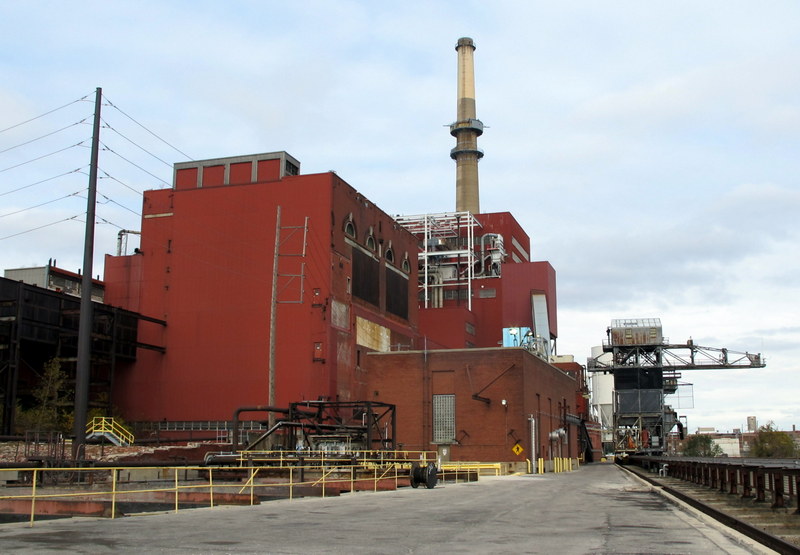
Illinois Law Applies to This Jobsite — Act Immediately
This facility is located in Illinois. Asbestos exposure claims arising from work at Illinois jobsites are governed by Illinois law, not Missouri law. Illinois’s statute of limitations for asbestos personal injury claims is 2 years from the date of diagnosis under 735 ILCS 5/13-202 — significantly shorter than Missouri’s 5-year deadline under §516.120.
Missouri residents who worked at this Illinois facility may have claims subject to both Illinois and Missouri law depending on where exposure occurred and which compensation avenue is pursued. Illinois court claims run on the Illinois five-year deadline. Asbestos bankruptcy trust claims run on separate internal trust deadlines. Do not assume Missouri’s 5-year window applies — if you have been diagnosed, consult an attorney who practices in both states immediately.
Pearl Station Asbestos Claims: A Legal Guide for Missouri Workers and Pike County Families
Illinois Central Illinois Public Service / Prairie Power, Inc. — Pearl, Illinois
Source note: Products, equipment, and companies identified in this article are drawn from public asbestos litigation records, court filings, EPA and OSHA regulatory databases, and publicly available industry records. Product identifications and company references reflect what has been alleged or documented in publicly filed litigation. This article does not constitute a finding of liability against any company.
⚠️ CRITICAL LEGAL DEADLINE WARNING
Missouri workers have 5 years from their date of diagnosis to file an asbestos claim under Missouri’s current statute of limitations (§516.120). That clock starts the day you receive a medical diagnosis — not the day you were exposed.
That deadline is under direct legislative threat right now. Missouri If signed into law, it cuts Missouri’s asbestos filing deadline from 5 years to 3 years — permanently — with no grace period for workers already diagnosed.
If you worked at Pearl Station or any Mississippi River corridor facility and have been diagnosed with mesothelioma, asbestosis, or asbestos-related lung cancer, contact a Missouri mesothelioma attorney now — before the law changes or critical evidence disappears.
A Small Plant With a Deadly Legacy
Pearl Station sits in Pike County, Illinois — a 24-megawatt distillate fuel oil-fired generating facility that operated under Illinois Central Illinois Public Service and later Prairie Power, Inc. Its modest size made it easy to overlook. For the insulators, pipefitters, boilermakers, and electricians who worked inside its turbine halls, boiler rooms, and mechanical spaces, asbestos exposure at Pearl Station was daily, unavoidable, and fatal for some.
Public litigation records, EIA data, and EPA databases have confirmed what workers suspected for decades: Pearl Station hosted asbestos-containing materials supplied by Combustion Engineering, Johns-Manville, Owens-Illinois, W.R. Grace, and Garlock Sealing Technologies. The diseases that followed — mesothelioma, asbestosis, lung cancer — are appearing now, decades after the work was done. If you worked at this facility, your legal clock is already running.
Pearl Station sits within the Mississippi River industrial corridor — the stretch of petrochemical plants, steel mills, power stations, and refineries running along both banks of the river from St. Louis north through Granite City, Wood River, Alton, and into Pike County. Workers in this corridor crossed state lines routinely. A boilermaker from St. Louis might work Pearl Station one month and the Labadie Energy Center in Franklin County, Missouri, the next. An insulator from East St. Louis might work Pearl Station, then cross the river to Portage des Sioux, then back to a refinery turnaround in Wood River. Asbestos exposure accumulated on both sides of the river — and which state’s law governs your claims matters enormously today. It will matter even more if Missouri HB 1664 becomes law.
If you worked at Pearl Station, performed maintenance or construction there as a contract tradesman, or lived with someone who brought home dusty work clothes from the plant, your legal deadline is running right now — and it may be shortened without warning.
What Was Pearl Station and Who Operated It?
Pearl Station is located in Pearl, Illinois, in Pike County — a small river community in west-central Illinois, approximately 90 miles north of St. Louis.
Key facility facts:
- Fuel type: Distillate fuel oil
- Generating capacity: 24 megawatts
- Original operator: Illinois Central Illinois Public Service
- Current EIA operator: Prairie Power, Inc.
- EIA background score: 61
- Service area: Distribution cooperatives across central and western Illinois
Prairie Power serves rural Illinois cooperatives, and its generating assets were built during an era when asbestos was considered indispensable in power plant construction. The EIA database — which tracks power generation assets nationally — has been used in asbestos litigation to establish facility timelines, ownership chains, and the periods during which tradesmen contacted asbestos-containing materials including Kaylo pipe covering, Thermobestos block insulation, and Monokote fireproofing.
Building the evidence that connects a specific worker to specific products at this specific facility takes months. A qualified Missouri asbestos attorney who handles power plant cases knows how to reconstruct that exposure history — but that work has to start before records disappear and witnesses die.
Generating Units — Official EIA Form 860 Record
The following unit-level data is drawn from the U.S. Energy Information Administration (EIA) Form EIA-860 Annual Electric Generator Report — the official federal registry of every U.S. power generating unit.
| Unit | Online Date | Nameplate Capacity | Prime Mover | Fuel Type | Status |
|---|---|---|---|---|---|
| Unit GT1 | June 1973 | 24 MW | Gas Turbine | Distillate Fuel Oil | Operating |
Total nameplate capacity: 24.0 MW (EIA-verified)
Source: U.S. Energy Information Administration, Form EIA-860 Annual Electric Generator Report, EIA Plant Code: 6238
Alleged Equipment Manufacturers
Gas Turbine Unit 1 (24 MW, online June 1973) is alleged, based on North American powerhouse database records, to have been a General Electric Frame 5 gas turbine-generator (model 5001PPPP). As a simple-cycle gas turbine installation, GT1 does not operate with a separate steam boiler. The earlier steam-electric Unit 1 (22 MW, online 1966, now retired and not reflected in current EIA records) is alleged, based on historical powerhouse records, to have been equipped with a Foster Wheeler front-wall-fired boiler and a General Electric turbine-generator set. General Electric and Foster Wheeler components manufactured during these periods have been alleged in publicly filed asbestos litigation to incorporate asbestos-containing insulation, gaskets, packing, and refractory materials throughout the boiler, turbine, and associated steam piping systems.
Why Asbestos Was Used at Pearl Station
Distillate fuel oil combustion generates extreme heat. Every component in the energy conversion chain operates under conditions that demand insulation. Throughout the mid-twentieth century, asbestos was the insulation material of choice — cheap, abundant, and capable of withstanding the thermal demands of power plant operation.
Asbestos-containing materials were applied to:
- Boiler shells and fireboxes lined with Combustion Engineering refractory products
- Steam lines and high-pressure piping covered with Kaylo and Thermobestos pipe insulation
- Turbine casings wrapped with Johns-Manville Aircell and Unibestos block insulation
- Flanges, valves, and fittings sealed with Garlock Sealing Technologies gaskets and packing
- Pumps and mechanical equipment housings insulated with Armstrong World Industries products
- Electrical equipment insulated with W.R. Grace Monokote and related thermal compounds
- Gaskets and packing at every pipe joint and connection point, including Cranite sheet gasket from Crane Co.
The hazard wasn’t simply that asbestos was present. Power plants are dynamic facilities — equipment breaks down, steam lines leak, gaskets fail. Every time a maintenance crew cut through Kaylo pipe covering, broke open a flanged connection sealed with a Garlock gasket, or ground off a failed Cranite sheet gasket, they released asbestos dust. In the confined spaces of a small generating station like Pearl, that dust had nowhere to go.
Workers who disturbed those materials — and bystanders working nearby — inhaled fibers that lodged permanently in lung tissue. The diseases those fibers cause take 20 to 50 years to surface. By the time a diagnosis arrives, the filing deadline is already running.
Understanding Your Missouri Asbestos Filing Deadline
Missouri’s statute of limitations gives mesothelioma and asbestos disease victims 5 years from the date of medical diagnosis to file a claim under §516.120. That is the law today. But five years is far less time than it sounds when you understand what building a mesothelioma case actually requires — and far less secure than it appears given what is moving through the Missouri legislature right now.
Current law: 5 years from diagnosis. Under Missouri HB 1664 (2026), if enacted: 3 years — with no grace period for workers already diagnosed.
HB 1664 is not a hypothetical. It passed the Missouri House on March 12, 2026, and is pending in the Senate. If signed, it takes effect immediately. A diagnosis today combined with a newly shortened statute could eliminate claims that workers reasonably believed were safely within their window.
Delay is dangerous for reasons that have nothing to do with any statute:
Witnesses die. The foremen, safety supervisors, co-workers, and union hall members who can testify that you worked alongside Kaylo insulation or replaced Garlock gaskets at Pearl Station are in their 70s and 80s. They are dying before depositions can be taken. Every month of delay is a month closer to losing testimony no document can replace.
Records disappear. Plant employment records, union dispatch logs, contractor payroll records, and purchasing invoices are not preserved indefinitely. Facilities close. Companies dissolve. Retention periods expire. The paper trail that places you at Pearl Station during the relevant years grows thinner every year.
Building a mesothelioma case takes time. Identifying every asbestos manufacturer whose products you contacted across decades of work — at Pearl Station, at Labadie, at Portage des Sioux, at the refineries along the Wood River corridor — requires reconstructing work histories spanning multiple states, multiple employers, and multiple decades. That process cannot be rushed into weeks.
Asbestos trust fund claims require their own timelines. More than 60 asbestos bankruptcy trusts established by companies including Johns-Manville, Owens Corning, and W.R. Grace compensate victims who meet each trust’s specific evidence standards. Filing against multiple trusts while pursuing civil litigation requires coordination that must begin as early as possible after diagnosis.
A diagnosis is not the time to wait. It is the time to call a Missouri mesothelioma attorney today.
The Companies Whose Products Harmed Pearl Station Workers
Public litigation records have identified specific companies whose asbestos-containing products were present at Pearl Station. These are not speculative defendants — they are manufacturers tied to Pearl Station through facility-specific evidence developed over decades of discovery in St. Clair County and Madison County, Illinois courtrooms. Workers pursuing an asbestos lawsuit in Missouri who also have Pearl Station in their exposure history will find many of these same defendants appearing in both states’ dockets.
Combustion Engineering
Combustion Engineering was one of the dominant manufacturers of boiler systems installed in American power plants throughout the mid-twentieth century. The same boiler configurations it delivered to major Mississippi River corridor facilities — including the Labadie Energy Center in Franklin County, Missouri, the Portage des Sioux Power Plant in St. Charles County, and the Sioux Energy Center — were supplied to smaller generating stations like Pearl. Combustion Engineering’s refractory products and boiler components contained chrysotile and amosite asbestos. The company’s asbestos liability was ultimately absorbed into the Combustion Engineering 524(g) trust, which continues to compensate workers who can document exposure to CE products. Workers with Pearl Station in their history and CE products in their exposure profile may have a claim against this trust regardless of whether they also pursue civil litigation.
Johns-Manville
Johns-Manville was the largest asbestos manufacturer in American history and the company most directly responsible for the epidemic that killed tens of thousands of power plant workers. Its Aircell pipe covering, Unibestos block insulation, and finishing cement were present in virtually every power plant built before federal asbestos regulations took effect. Johns-Manville’s bankruptcy created the Manville Personal Injury Settlement Trust — the largest single asbestos compensation fund in existence — which has paid billions of dollars to workers whose exposure histories include JM products. Pearl Station workers with documented exposure to Johns-Manville insulation materials have a direct path to trust compensation that runs parallel to any civil claims they may pursue against solvent defendants.
Owens
Litigation Landscape
Industrial manufacturing facilities like Pearl Station Pike County Illinois Central Illinois Public Service commonly involved asbestos-containing insulation, gaskets, valves, and pipe coverings. Historical litigation arising from such facilities has identified several manufacturers as recurring defendants, including Johns-Manville, Combustion Engineering, Babcock & Wilcox, Crane Co., and W.R. Grace. These companies supplied insulation products, boiler components, and thermal systems widely used in power generation and industrial operations during the mid-to-late twentieth century.
Workers and their families have accessed compensation through multiple asbestos bankruptcy trust funds established by these manufacturers. The Johns-Manville Settlement Trust, Combustion Engineering Trust, Babcock & Wilcox Trust, Crane Co. Trust, and W.R. Grace Trust remain primary sources of recovery for claimants. Each trust maintains distinct claim procedures, medical criteria, and payment schedules. Trust claims do not require proving individual fault and often resolve faster than traditional litigation.
Publicly filed litigation documents demonstrate that workers exposed at industrial power and manufacturing facilities have pursued both trust claims and lawsuits against remaining solvent defendants and premises liability targets. Claims typically allege failure to warn, failure to use safe alternatives, and negligent exposure to friable and non-friable asbestos products.
Individuals who worked at Pearl Station Pike County Illinois Central Illinois Public Service and subsequently developed mesothelioma, lung cancer, or asbestosis should consult an experienced Missouri asbestos attorney to evaluate their eligibility for trust compensation and any available litigation claims.
Missouri DNR Asbestos Notification Records
The following 4 project notification(s) are documented with the Missouri Department of Natural Resources (NESHAP program) for Ameren Missouri in Labadie. These are public regulatory records.
| Project ID | Year | Site / Building | Operation | ACM Removed | Contractor |
|---|---|---|---|---|---|
| A6884-2015 | 2016 | 2016 O&M Ameren Labadie Power Station | OM | Will advise per project. | Envirotech, Inc. |
| A7273-2017 | 2017 | Ameren Labadie Power Station | Renovation | 800sf frbl TSI, 128sf n-f galbestos, 200lf frbl TSI, 20lf frbl gasket | Envirotech, Inc. |
| 5959-2013 | 2013 | Labadie Energy Center Microwave Bldg | Demolition | caulk, metal siding (asb contr=CENPRO) (NF I-550sf; NF II-91lf) | Plocher Construction Company Inc. |
| 11366-2022 | 2022 | Ameren Labadie Entrance Bridge | Demolition | none | Spirtas Wrecking Company |
Source: Missouri Department of Natural Resources, NESHAP Asbestos Abatement & Demolition/Renovation Notification Program — public regulatory records.
Recent News & Developments
No facility-specific news articles, regulatory enforcement actions, or court filings referencing Pearl Station in Pike County, Illinois, operated by Illinois Central/Central Illinois Public Service, appear in currently available public records or scraped sources at the time of this writing. The absence of indexed reporting does not indicate an absence of historical asbestos use or exposure risk; rather, it reflects the limited digital archiving of records pertaining to smaller regional generating stations and their associated workforce histories.
Regulatory Landscape for Similar Facilities
Power generating stations of the type operated by Central Illinois Public Service fall within the scope of several overlapping federal frameworks governing asbestos hazards. Under EPA’s National Emission Standards for Hazardous Air Pollutants (NESHAP), codified at 40 CFR Part 61 Subpart M, any demolition, renovation, or decommissioning activity at a facility containing regulated asbestos-containing material (RACM) triggers mandatory notification to the applicable state environmental agency and work practice standards governing fiber release. OSHA’s construction standard at 29 CFR 1926.1101 and the general industry standard at 29 CFR 1910.1001 similarly govern disturbance of asbestos-containing insulation, gaskets, packing materials, and fireproofing — all material types commonly documented at coal-fired and steam-generating stations built or substantially equipped before 1980.
Historical Exposure Context
Regional utility facilities in Illinois dating to the mid-twentieth century routinely incorporated asbestos-containing products from manufacturers including Johns-Manville, Owens-Illinois, Armstrong World Industries, Babcock & Wilcox, Combustion Engineering, and W.R. Grace. These products typically appeared as pipe and boiler lagging, turbine insulation blankets, refractory cements, gaskets, valve packing, and floor tile. Workers in boilermaker, pipefitter, millwright, and electrician trades at stations of this type faced documented elevated exposure risks, particularly during outage and maintenance cycles when insulation was disturbed, removed, or replaced without the controls now required under current federal standards.
Demolition and Decommissioning Considerations
If Pearl Station has undergone or is scheduled for decommissioning or major structural demolition, applicable NESHAP requirements would mandate a thorough asbestos survey, notification filing, and regulated removal prior to any building disturbance. Public records from the Illinois Environmental Protection Agency (IEPA) and the U.S. EPA Region 5 office in Chicago would represent the primary documentary sources for any such abatement activity. Researchers and claimants are encouraged to request FOIA disclosures from these agencies for facility-specific compliance records.
Litigation Note
No publicly reported verdicts or settlements specifically naming Pearl Station or Central Illinois Public Service in connection with this location have been identified in asbestos litigation databases at the time of publication. However, occupational asbestos claims arising from Illinois utility worksites have been filed in both Illinois and Missouri jurisdictions, and historical contractor relationships at such stations are frequently relevant to product identification in litigation.
Workers or former employees of Pearl Station Pike County Illinois Central Illinois Public Service who were diagnosed with mesothelioma, lung cancer, or asbestosis may have legal rights under Missouri law. Missouri § 537.046 extends the civil filing window for occupational disease claims.
For informational purposes only. Not legal advice. No attorney-client relationship is created by reading this page. © 2026 Rights Watch Media Group LLC — Disclaimer · Privacy · Terms · Copyright
