Mesothelioma Lawyer Missouri: Legal Guide for Peabody Coal Company Asbestos Exposure


Why This Matters Right Now

For generations, Peabody Coal Company operated some of the most productive coal mines in the Illinois Basin, employing thousands of workers across southwestern Illinois, western Kentucky, and Indiana. These operations powered American industry and provided steady union wages to working-class families through the Heat and Frost Insulators Local 1 (St. Louis, MO), Plumbers and Pipefitters UA Local 562 (St. Louis, MO), and similar unions. They also allegedly exposed thousands of workers to deadly asbestos fibers from products manufactured by Johns-Manville, Owens Corning, Garlock Sealing Technologies, Armstrong World Industries, and W.R. Grace — companies that historical documents show knew these materials were dangerous.

If you or a family member worked at a Peabody Illinois Basin mine — or laundered the work clothes of someone who did — you may have been exposed to asbestos and may be entitled to substantial compensation.


⚠️ MISSOURI FILING DEADLINE: 5 YEARS FROM DIAGNOSIS

Missouri law gives asbestos disease victims five years from the date of diagnosis to file a personal injury claim. Mo. Rev. Stat. § 516.120. Miss that window and you lose your right to compensation — permanently. Companion legislation is advancing that could cut this deadline to two years. Call a qualified mesothelioma lawyer Missouri today. Memories fade. Records disappear. Witnesses die. Every month you wait makes your case harder to win.


PART ONE: What Happened at Peabody’s Illinois Basin Operations

Company History and Scale of Operations

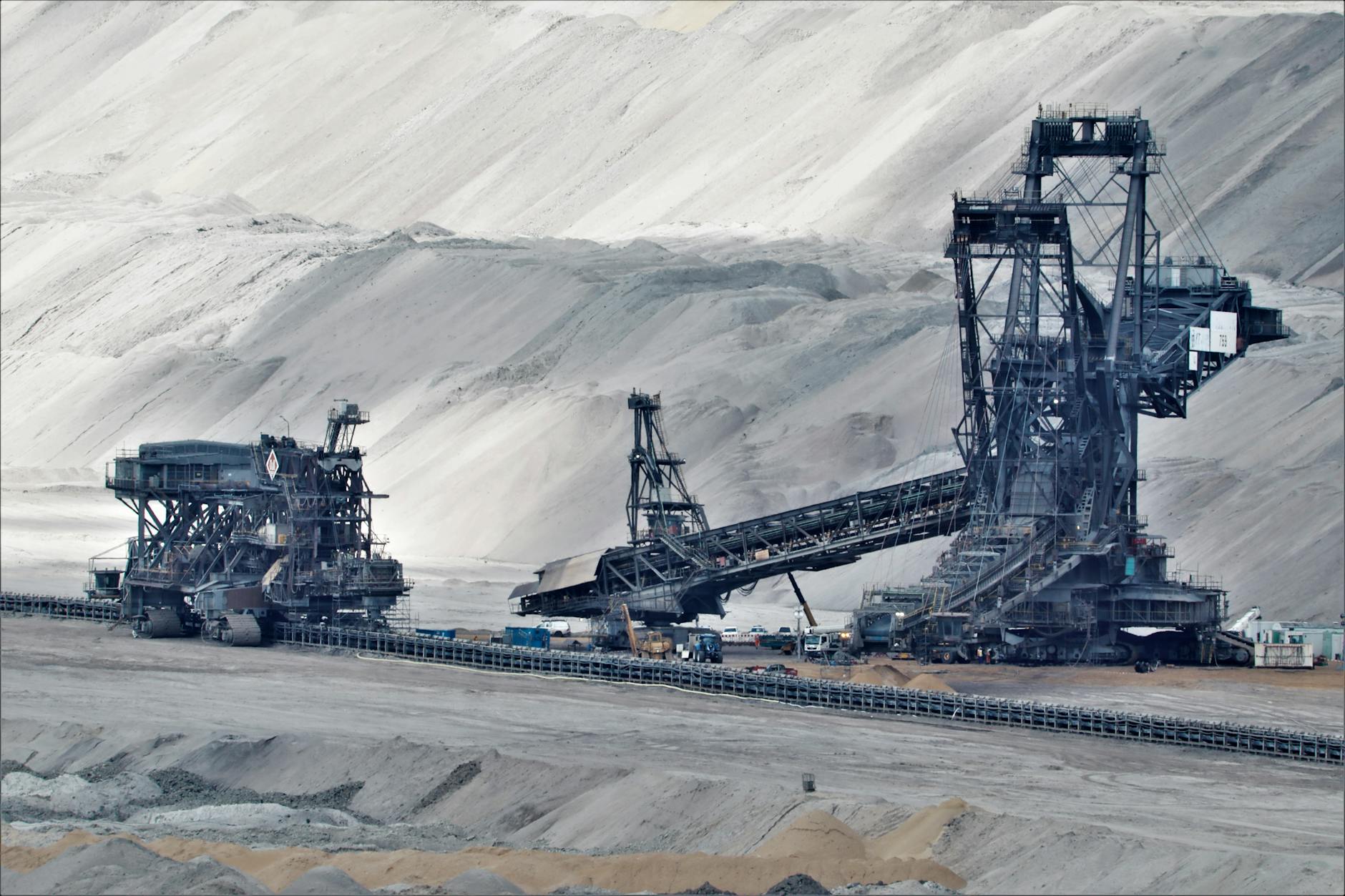
Peabody Coal Company was founded in 1883 and grew to become one of the largest coal producers in the United States. By the mid-twentieth century, Peabody had established an extensive network of underground and surface mines throughout the Illinois Basin — a geological formation encompassing southern Illinois, western Kentucky, and southwestern Indiana sitting atop one of the largest bituminous coal reserves in North America.

Major Peabody Illinois Basin mines included:

  • Peabody Mine No. 10 (Marissa, Illinois — St. Clair County)
  • Peabody Mine No. 16 (Rosiclare and Hardin County area)
  • Spartan Mine (Perry County, Illinois)
  • River King Mine (Freeburg, Illinois — St. Clair County)
  • Lynnville Mine (Lynnville, Indiana)
  • Sinclair Mine (Muhlenberg County, Kentucky)
  • Squaw Creek Mine (Gibson County, Indiana)
  • Various surface and preparation plant operations throughout the basin

These were not small operations. Peabody’s Illinois Basin mines employed hundreds to thousands of workers at peak production, running continuous mining shifts around the clock, seven days a week. The company later merged operations and became part of what is now Peabody Energy, headquartered in St. Louis, Missouri.

The Industrial Infrastructure: Where Asbestos Was Used

A major underground coal mine is not simply a hole in the ground. It is a sprawling industrial campus. To understand the asbestos exposure Missouri workers faced, you need to know where asbestos-containing materials were located and why they were there.

Surface facilities where asbestos was common:

  • Boiler houses supplying steam heat and process steam — insulated with Johns-Manville Thermobestos and Kaylo block insulation, with Garlock Sealing Technologies gaskets and rope packing
  • Preparation plants (tipples) where coal was washed, sorted, and loaded — featuring Owens Corning Aircell insulation on process steam lines
  • Compressor stations driving pneumatic systems — with W.R. Grace asbestos-containing compressor gaskets and valve packings
  • Electrical substations and switchgear rooms — containing Armstrong World Industries asbestos insulation materials in panel backing and arc suppression components
  • Maintenance shops for equipment repair — where asbestos brake linings and clutch facings were regularly disturbed
  • Conveyor systems — with Eagle-Picher asbestos-containing bearing housings and brake components
  • Administrative and bathhouse buildings — insulated with Kaylo and Thermobestos materials; finished with Gold Bond asbestos-containing drywall and Sheetrock products containing asbestos fiber

Underground workings with asbestos components:

  • Ventilation systems with large fans and ductwork insulated with Johns-Manville products
  • Pump stations removing water — featuring asbestos-wrapped steam and process lines
  • Underground electrical systems — with asbestos-insulated cables and switchgear components
  • Compressed air lines supplying drills and tools — wrapped in Kaylo and similar Johns-Manville asbestos pipe insulation

All of these systems required insulation, heat management, and fire protection. For much of the twentieth century, asbestos products were the industry standard for those applications — which is why asbestos exposure was a widespread occupational hazard across every trade discipline at these facilities.

Specific Asbestos Products Installed at Peabody Facilities

Historical construction records and equipment specifications from Peabody operations document the use of specific asbestos-containing products that remain directly relevant to Missouri mesothelioma settlement valuations and defendant identification:

Johns-Manville Products:

  • Kaylo — rigid asbestos block insulation for pipe and equipment
  • Thermobestos — high-temperature asbestos block and board insulation
  • Monokote — spray-applied fireproofing containing asbestos
  • Asbestos pipe coverings and asbestos-containing cements

Owens Corning / Owens-Illinois:

  • Aircell — asbestos-containing rigid pipe insulation and board insulation
  • Asbestos-containing fiberglass composites (some products contained asbestos as reinforcement)

Garlock Sealing Technologies:

  • Asbestos-containing gaskets, rope packing, and valve stem packing throughout steam systems
  • High-temperature asbestos compression packing for pump and valve applications

Armstrong World Industries:

  • Asbestos-containing block insulation and gasket materials
  • Asbestos insulation used in HVAC and process equipment

W.R. Grace:

  • Asbestos-containing pipe insulation products and thermal insulation boards
  • Asbestos fireproofing products

Eagle-Picher:

  • Asbestos-containing brake linings and clutch facings for conveyor systems and mining equipment
  • Asbestos gasket and packing materials

Building Products:

  • Gold Bond and Sheetrock asbestos-containing drywall and joint compound — used in bathhouses, offices, and administrative buildings at surface facilities
  • Georgia-Pacific and Celotex asbestos-containing floor tiles, ceiling tiles, and insulation boards documented at multiple Peabody operations

Combustion Engineering / Crane Co.:

  • Asbestos-containing boiler refractory materials
  • Asbestos thermal insulation castables

Why Asbestos Was Deliberately Specified and Installed

Asbestos was not randomly present at Peabody facilities. Engineers specified it, purchasing departments ordered it, and crews installed it — because manufacturers provided technical specifications promoting these products for exactly these applications.

Thermal insulation. Steam systems heated surface buildings and powered equipment at every Peabody facility. Johns-Manville Kaylo and Thermobestos, Owens Corning Aircell, and W.R. Grace products were the industry-standard specification from roughly the 1930s through the mid-1970s. Manufacturers explicitly marketed asbestos pipe insulation as the superior choice, citing thermal performance and cost.

Fire protection. Coal dust burns. Johns-Manville Monokote and similar asbestos-containing fireproofing was sprayed on structural steel at Peabody preparation plants, applied to equipment enclosures, and incorporated into fireproof coatings throughout surface structures. Manufacturers marketed asbestos fireproofing as the industry standard for coal handling facilities.

Equipment sealing and friction. Boiler gaskets and packing materials from Garlock and Armstrong contained asbestos as standard specification. Heavy mining equipment — conveyors, hoists, coal cars — ran Eagle-Picher and competitor asbestos-containing brake linings and clutch facings as original equipment.

Electrical insulation. Wiring, switchgear components, and panel insulation at Peabody facilities incorporated asbestos materials — particularly Armstrong World Industries products in older installations — specified for fire resistance and electrical properties.

Building materials and finishes. Gold Bond and Sheetrock asbestos-containing drywall went into bathhouses, offices, and support structures. Georgia-Pacific and Celotex floor tiles, ceiling tiles, and insulation boards were installed throughout surface facilities. These products held dominant market share during the full operational period.

Underground fire suppression and ventilation. Manufacturers marketed asbestos-containing fire-stopping materials and fire-resistant coatings specifically for underground mining applications. Peabody used them at pump stations and ventilation hubs throughout the Illinois Basin.


PART TWO: Timeline of Exposure — When Were Workers at Risk?

The exposure timeline determines which workers were exposed and during what employment periods — facts that directly affect which defendants you can sue and which asbestos trust funds you can claim against.

Peak Exposure Era: 1945–1965

This period produced the heaviest documented exposures at Peabody Illinois Basin operations.

Post-war expansion brought massive construction and installation projects across all Illinois Basin mines. Johns-Manville Kaylo, Thermobestos, and Monokote, Owens Corning Aircell, and W.R. Grace products were specified for virtually all pipe, boiler, and vessel insulation. Workers employed during construction phases at Spartan Mine and River King Mine, or during major renovation projects at Peabody Mine No. 10 and No. 16, sustained the heaviest documented exposures. Insulators with Heat and Frost Insulators Local 1 and Local 27 (Kansas City, MO), pipefitters with UA Local 562 and UA Local 268 (Kansas City, MO), boilermakers, and maintenance workers hired during this period accumulated the most concentrated exposure histories.

Ongoing Exposure: 1965–1978

Asbestos use continued throughout this period. Some manufacturers began transitioning to alternative materials in the late 1970s following initial federal scrutiny, but workers still encountered new asbestos-containing material installations specified by Peabody’s engineering and construction departments. Workers also disturbed previously installed asbestos-containing materials during routine maintenance — cutting into insulation to access pipe joints, pulling gasket materials, removing and replacing worn asbestos brake components. That disturbance generated fiber releases equal to or greater than original installation work.

High-Risk Removal Era: 1978–1990s

OSHA and EPA regulatory action drove asbestos out of new installations. But vast quantities of previously installed Johns-Manville, Owens Corning, Armstrong, and W.R. Grace asbestos-containing materials remained in aging Peabody facilities. Maintenance workers, independent contractors, and insulation workers performing removal and replacement operations at Spartan Mine, River King Mine, and other Illinois Basin operations faced documented exposure to these legacy materials. Abatement and demolition work during this period generated high fiber concentrations, often in confined spaces with inadequate ventilation.

Legacy Exposure: 1990s–Present

Workers performing demolition, renovation, or abatement at former Peabody Illinois Basin facilities — many of which closed over the past two decades — have encountered asbestos materials installed thirty to sixty years earlier. Latency periods of twenty to fifty years between first exposure and mesothelioma diagnosis mean that workers from any of these eras may be receiving diagnoses today.


PART THREE: Diseases Caused by Asbestos Exposure

Mesothelioma

Malignant mesothelioma is the disease most directly associated with occupational asbestos exposure. It develops in the lining of the lungs (pleural mesothelioma), abdomen (peritoneal mesothelioma), or, rarely, the heart (pericardial mesothelioma). There is no safe level of asbestos exposure — mesothelioma has been diagnosed in workers with relatively brief exposure histories. The latency period between first asbestos exposure and mesothelioma diagnosis typically ranges from twenty to fifty years, which is why former Peabody workers employed as far back as the 1950s and 1960s are receiving diagnoses today.

Mesothelioma is aggressive. Median survival after


Litigation Landscape

Coal mining operations, particularly those utilizing asbestos-containing insulation for pipe wrapping, boiler systems, and thermal protection equipment, generated significant occupational exposure. Litigation arising from such facilities has identified manufacturers including Johns-Manville, Combustion Engineering, Babcock & Wilcox, Crane Co., Armstrong, and Eagle-Picher as defendants in documented asbestos claims. These companies supplied insulation products, gaskets, and high-temperature materials widely used in industrial mining infrastructure throughout the mid-to-late twentieth century.

Workers exposed at Peabody Coal Company Illinois basin operations may pursue claims through multiple asbestos bankruptcy trust funds established by these manufacturers. The Johns-Manville Personal Injury Settlement Trust, Combustion Engineering Asbestos Settlement Trust, Babcock & Wilcox asbestos trusts, Crane Co. trusts, Armstrong Building Products Asbestos Settlement Trust, and Eagle-Picher Industries trusts are among the funds available to eligible claimants. Trust claims typically require documentation of exposure at the specific facility and a diagnosis of an asbestos-related disease.

Litigation patterns show that claims originating from coal mining operations with asbestos insulation exposure have been pursued in state and federal court, with many resolved through trust fund settlements. The multi-defendant nature of mining operations—where numerous manufacturers supplied materials over decades—has historically resulted in consolidated claims and documented settlements through trust channels.

Missouri workers diagnosed with mesothelioma, lung cancer, or asbestosis following exposure at this facility should consult an experienced Missouri asbestos attorney promptly to evaluate their eligibility for trust claims and any applicable litigation options. O’Brien Law Firm represents workers with asbestos-related disease in Missouri and can assess your specific exposure history and medical diagnosis.

Missouri DNR Asbestos Notification Records

The following 1 project notification(s) are documented with the Missouri Department of Natural Resources (NESHAP program) for AMOCO Oil Company in Sugar Creek. These are public regulatory records.

Project IDYearSite / BuildingOperationACM RemovedContractor
2876-20012001Sugar Creek Asbestos AbatementRenovation1,000 sq. ft. acoustical ceiling texture, 247 ln. ft. duct wdorkMajor Abatement & Demolition Inc.

Source: Missouri Department of Natural Resources, NESHAP Asbestos Abatement & Demolition/Renovation Notification Program — public regulatory records.

Recent News & Developments

No facility-specific enforcement actions, incident reports, or regulatory citations directed exclusively at Peabody Coal Company’s Illinois Basin mine operations in connection with asbestos insulation appear in currently available public records or recent news archives. However, the broader regulatory and litigation history surrounding Peabody Coal and its Illinois Basin operations provides meaningful context for workers and former employees researching their potential asbestos exposure.

Regulatory Landscape

Peabody Coal’s Illinois Basin operations, like all large coal mining and mineral processing facilities that utilized asbestos-containing insulation materials on boilers, pipe systems, and mechanical equipment, are subject to the National Emission Standards for Hazardous Air Pollutants (NESHAP) under 40 CFR Part 61, Subpart M. This federal framework governs asbestos handling, waste disposal, and notification requirements during any renovation or demolition activity. OSHA’s construction and general industry asbestos standards — 29 CFR 1926.1101 and 29 CFR 1910.1001, respectively — additionally govern worker protection obligations during maintenance and repair work involving legacy insulation materials. Illinois EPA and the Illinois Department of Natural Resources have historically maintained oversight of mining site environmental compliance in the basin region.

Corporate History and Restructuring

Peabody Energy, the successor entity to Peabody Coal Company, filed for Chapter 11 bankruptcy protection in April 2016, emerging from bankruptcy in 2017. Corporate restructurings of this nature are significant for asbestos claimants because they can affect the availability of solvent defendants and the standing of existing or future tort claims. Individuals who worked at Illinois Basin mines during periods when asbestos insulation was actively installed or disturbed — particularly between the 1940s and the 1980s — should be aware that bankruptcy proceedings may have reorganized liability exposure across corporate entities.

Product Identification

Historical trade records and litigation documents from comparable coal mine operations in Illinois indicate that boiler lagging, pipe insulation, block insulation, and gasket materials at facilities of this era were commonly sourced from manufacturers including Johns-Manville, Owens-Illinois, Armstrong World Industries, Garlock, and W.R. Grace. Maintenance workers, pipe fitters, boilermakers, and electricians working alongside these materials during routine operations or mine equipment overhauls faced documented exposure risks, particularly in confined underground or surface plant environments where ventilation was limited.

Ongoing Litigation Context

Asbestos litigation involving former Peabody Coal operations has appeared in Illinois and Missouri courts over multiple decades, with claims typically filed by miners, surface plant workers, and their surviving family members. These cases frequently name both the mining operator and the manufacturers of specific insulation products as defendants.

Workers or former employees of Peabody Coal Company Illinois basin mine operations asbestos insulation who were diagnosed with mesothelioma, lung cancer, or asbestosis may have legal rights under Missouri law. Missouri § 537.046 extends the civil filing window for occupational disease claims.


For informational purposes only. Not legal advice. No attorney-client relationship is created by reading this page. © 2026 Rights Watch Media Group LLC — Disclaimer · Privacy · Terms · Copyright