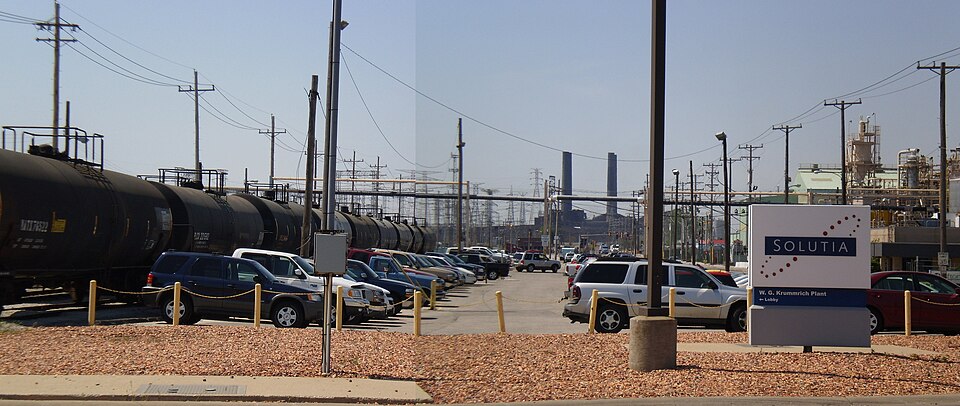
Illinois Law Applies to This Jobsite — Act Immediately
This facility is located in Illinois. Asbestos exposure claims arising from work at Illinois jobsites are governed by Illinois law, not Missouri law. Illinois’s statute of limitations for asbestos personal injury claims is 2 years from the date of diagnosis under 735 ILCS 5/13-202 — significantly shorter than Missouri’s 5-year deadline under §516.120.
Missouri residents who worked at this Illinois facility may have claims subject to both Illinois and Missouri law depending on where exposure occurred and which compensation avenue is pursued. Illinois court claims run on the Illinois five-year deadline. Asbestos bankruptcy trust claims run on separate internal trust deadlines. Do not assume Missouri’s 5-year window applies — if you have been diagnosed, consult an attorney who practices in both states immediately.
Asbestos Exposure at Monsanto Sauget — How Missouri Victims Can Pursue Compensation
If You Worked There, Your Health and Legal Rights May Be at Stake
Source note: Products, equipment, and companies identified in this article are drawn from public asbestos litigation records, court filings, EPA and OSHA regulatory databases, and publicly available industry records. Product identifications and company references reflect what has been alleged or documented in publicly filed litigation. This article does not constitute a finding of liability against any company.
⚠️ CRITICAL DEADLINE WARNING FOR MISSOURI RESIDENTS
Missouri’s current statute of limitations gives mesothelioma and asbestos disease victims 5 years from the date of medical diagnosis to file a claim under Missouri Revised Statutes §516.120. That clock starts the day your doctor diagnoses you — not the day you were exposed, and not the day you first felt symptoms.
That 5-year window is now under direct legislative threat.
**Missouri If signed into law, this bill would cut the asbestos statute of limitations from 5 years to 3 years — eliminating two full years of filing time for every future asbestos victim in Missouri. There is no guarantee of when a Senate vote will occur or how quickly the Governor could sign it. The Missouri asbestos filing deadline could shrink with little warning.
Missing the statute of limitations deadline permanently bars your recovery. Missouri courts recognize no exceptions and no extensions once that deadline passes.
Even with 5 years on the clock today, waiting is dangerous. Witnesses in their 70s and 80s die before depositions can be taken. Employment records disappear when plants close. Building a mesothelioma case requires identifying dozens of manufacturers and jobsites across decades of work history. Claims against more than 60 asbestos bankruptcy trusts each require separate documentation and filing processes that take months to complete properly.
If you or a family member has been diagnosed with mesothelioma, asbestosis, or asbestos-related lung cancer, call a Missouri mesothelioma lawyer today. Do not wait to see what happens with HB 1664. The time to act is now.
Workers who clocked in at Monsanto Chemical’s Sauget, Illinois facility didn’t know they were inhaling fibers that would trigger fatal diseases decades later. The sprawling chemical complex just across the Mississippi River from St. Louis — at the heart of the industrial corridor stretching south through Granite City, Wood River, and into St. Clair and Madison Counties — was saturated with asbestos-containing materials: Johns-Manville Thermobestos pipe covering, W.R. Grace Monokote fireproofing, Garlock Sealing Technologies gasket and packing products. Pipefitters, insulators, boilermakers, maintenance workers, Heat and Frost Insulators Local 1 members, Plumbers and Pipefitters UA Local 562 contractors, and Boilermakers Local 27 members who worked anywhere near these operations faced routine, often daily asbestos exposure they couldn’t avoid given the era’s practices and materials. Many have since been diagnosed with mesothelioma, asbestosis, or lung cancer. Many more have died.
This guide is for former Monsanto Sauget workers, their spouses, their children, and the families of those already lost. If you or someone you loved worked at this plant between the mid-twentieth century and 2002, you need to understand what happened, why it happened, and what legal rights you can still exercise — including rights under both Illinois and Missouri law, since many workers crossed the river regularly and hold claims in both states. Given the active threat posed by Missouri HB 1664 (2026), every Missouri-connected worker or family member with a diagnosis needs to understand their current deadline and consult a qualified Missouri asbestos attorney immediately.
What Was the Monsanto Sauget Facility?
A Chemical Manufacturing Hub at the Center of Missouri-Illinois Asbestos Exposure
Sauget, Illinois was purpose-built for heavy industry. Located in St. Clair County directly across the river from St. Louis, the village was originally named “Monsanto” — and later renamed Sauget in 1968, in part to distance itself from the chemical company’s reputation. Monsanto owned much of the land, employed most of the residents, and shaped the community’s economic existence for generations.
The Sauget complex was one of the largest chemical manufacturing facilities in the Midwest. Its position on the Illinois bank of the Mississippi placed it squarely within the industrial corridor that also included Granite City Steel, the Shell Oil Roxana Refinery in Wood River, and — on the Missouri side — the Labadie Energy Center in Franklin County, the Portage des Sioux Power Plant in St. Charles County, and Monsanto’s chemical operations in North St. Louis County. Workers, contractors, and union members from Heat and Frost Insulators Local 1, UA Local 562, and Boilermakers Local 27 moved between these facilities regularly, accumulating asbestos exposures they couldn’t escape during those working years. Missouri-resident workers who accumulated those exposures are subject to Missouri’s current 5-year filing deadline under §516.120 — a deadline that HB 1664 (2026) could reduce to 3 years at any time.
The Sauget complex produced herbicides, plasticizers, industrial chemicals, and petrochemical derivatives. That production infrastructure — steam systems, boilers, turbines, and miles of process piping — required exactly the kind of insulation and sealing materials that mid-twentieth century American industry supplied almost universally with asbestos. Combustion Engineering boiler systems installed throughout the Sauget complex demanded continuous application of asbestos-containing insulation and refractory materials. Crane Co. valves and fittings throughout the process piping network incorporated Cranite gaskets and asbestos packing materials as standard components.
Active Exposure Period: 1946–2002
The period of most intense asbestos use and documented exposure risk runs from approximately 1946 through 2002.
Post-World War II expansion drove explosive growth at Sauget. New production lines, additional processing equipment, expanded pipe networks, and upgraded Combustion Engineering boiler systems went in throughout the late 1940s, 1950s, and 1960s — precisely when Johns-Manville, Owens-Illinois, Eagle-Picher, and Armstrong World Industries were supplying asbestos insulation products to American industry at their historical peak. Workers hired during this era, whether as direct Monsanto employees, Heat and Frost Insulators Local 1 members out of St. Louis, Boilermakers Local 27 members, or UA Local 562 contractors, absorbed the heaviest documented asbestos exposures in this region.
Even after OSHA’s initial asbestos standards took effect in the 1970s, Johns-Manville Thermobestos pipe covering, Owens-Illinois Kaylo block insulation, and Eagle-Picher Superex pipe insulation installed in previous decades remained in place throughout the Sauget facility. Workers performing maintenance, repair, renovation, and demolition through the 1980s and into the 1990s continued to disturb these materials — releasing fibers into the air they breathed every working day. Those workers are aging. Their co-workers who could serve as witnesses are aging with them. Every month of delay after a diagnosis makes evidence harder to preserve, which is precisely why Missouri’s 5-year deadline under §516.120 should never be treated as an invitation to wait.
Why Was Asbestos Everywhere at Monsanto Sauget?
Chemical Manufacturing and the Industrial Demand for Asbestos Products
Chemical manufacturing requires moving corrosive, volatile, and extremely hot materials through pressurized pipe networks. Steam systems, high-pressure Combustion Engineering boilers, heat exchangers, reactors, and distillation columns all generate intense heat that must be carefully managed.
Asbestos was the insulation material of choice for all of these applications because it genuinely performed well: it tolerated extreme temperatures without degrading, resisted chemical attack, could be formed into pipe covering, cement, cloth, packing, and gasket materials, and was inexpensive and widely available from manufacturers including Johns-Manville, Eagle-Picher, Armstrong World Industries, and Celotex.
The result was a facility saturated with asbestos-containing materials — miles of Johns-Manville Thermobestos and Eagle-Picher Superex pipe insulation, Combustion Engineering boiler insulation, W.R. Grace Monokote fireproofing cement, Garlock Sealing Technologies gasket sheet and compression packing, and Crane Co. Cranite gasket materials. All of these products released respirable fibers when cut, fitted, removed, disturbed, or allowed to deteriorate in the harsh chemical processing environment. The same product lines — Johns-Manville Thermobestos, Owens-Illinois Kaylo, Garlock packing materials — were simultaneously in use at Granite City Steel across the river and at the Labadie and Portage des Sioux generating stations on the Missouri side. That cross-site exposure history is often the key to identifying the full range of liable defendants and available asbestos trust fund claims — and experienced Missouri toxic tort counsel know how to use it.
The Power Generation System and Its Insulation Requirements
The facility’s 5.9 MW generating capacity represents a separate and independent source of worker exposure. Turbine systems and generators of this era required extensive insulation on steam lines, exhaust systems, and associated pipe networks. Heat and Frost Insulators Local 1 members and UA Local 562 pipefitters who maintained this power generation equipment worked in regular contact with Owens-Illinois Kaylo and Johns-Manville Thermobestos insulation products — without respiratory protection for most of the plant’s operational history. Boilermakers Local 27 members who serviced the Combustion Engineering boiler systems at Sauget carried those same exposures home to Missouri communities across the river every night.
Those Missouri-resident workers and their family members currently have 5 years from diagnosis to file under §516.120. Missouri No one can predict when that bill moves or when the Governor signs it. The workers who lose two years of filing time won’t get a warning letter. They’ll simply run out of time.
Who Was Exposed? Identifying Monsanto Sauget Asbestos Victims
Litigation Landscape
Workers at chemical manufacturing facilities of Monsanto’s era faced exposure to asbestos-containing insulation, gaskets, valves, and pipe wrapping. Litigation arising from such facilities has identified several manufacturers as common defendants, including Johns-Manville, Owens-Corning, Combustion Engineering, Crane Co., W.R. Grace, Garlock, Armstrong, Babcock & Wilcox, and Eagle-Picher. These companies supplied asbestos products widely used in industrial process equipment, boilers, and thermal systems typical of mid-20th century chemical plants.
Publicly filed litigation documents reflect that workers at chemical manufacturing facilities have pursued claims for mesothelioma and asbestos-related diseases. The defendants identified in such cases have since established bankruptcy trust funds to compensate injured claimants. Relevant trusts include those created by Johns-Manville, Owens-Corning, Combustion Engineering, Crane Co., W.R. Grace, Garlock, Armstrong Industries, Babcock & Wilcox, and Eagle-Picher. Each trust maintains its own claim procedures, payment schedules, and available compensation pools.
Chemical plant workers often qualify for claims against multiple trusts because asbestos products from competing manufacturers were used in overlapping systems and timeframes. Additionally, direct lawsuits against non-bankrupt entities or their successors remain available in many jurisdictions. Missouri state courts have a well-established docket for asbestos litigation, and the state’s workers’ compensation system may also provide benefits for occupational asbestos disease.
Establishing which specific products were present at your worksite, the dates of exposure, and your job duties strengthens trust fund claims and potential litigation. If you worked at the Monsanto Sauget facility and have developed mesothelioma or an asbestos-related disease, an experienced Missouri asbestos attorney can evaluate your exposure history and advise on available remedies through trust funds and litigation.
Recent News & Developments
No recent facility-specific news articles or public regulatory enforcement actions appear in current indexed sources for the Monsanto Chemical facility in Sauget, Illinois, sometimes referenced in connection with the greater St. Louis industrial corridor. However, a review of public records and historical documentation provides relevant context for workers and their families seeking information about asbestos exposure at this site.
Operational and Environmental History
The Sauget industrial area, historically known as Monsanto, Illinois — renamed in honor of the company that dominated its industrial landscape — has been the subject of extensive environmental scrutiny over decades. The Monsanto Chemical operations in Sauget are associated with Superfund-related contamination investigations, and the broader East St. Louis industrial zone has been subject to EPA oversight concerning legacy chemical and industrial pollutants. While publicly available records do not document a singular catastrophic fire or explosion at this specific Monsanto Chemical facility that is confirmed to have disturbed asbestos-containing materials, the aging infrastructure characteristic of mid-twentieth century chemical plants of this type routinely incorporated asbestos in pipe insulation, boiler lagging, pump packing, gaskets, and structural fireproofing.
Regulatory Landscape
Facilities of this type and era fall under the National Emission Standards for Hazardous Air Pollutants (NESHAP) regulations governing asbestos, codified at 40 CFR Part 61, Subpart M. Any renovation or demolition activity at the Sauget plant would have triggered mandatory notification requirements to the Illinois EPA and compliance with federal asbestos work practice standards. OSHA’s asbestos construction standard at 29 CFR 1926.1101 and the general industry standard at 29 CFR 1910.1001 would have governed worker exposure during maintenance and repair operations throughout the plant’s operational life.
Product Identification Context
Chemical manufacturing facilities operating in the mid-twentieth century commonly sourced insulation and refractory products from manufacturers including Johns-Manville, Owens-Illinois, Combustion Engineering, Babcock & Wilcox, and W.R. Grace. Boiler and steam system insulation, pipe covering, and valve and flange gaskets at industrial chemical plants of this era are well-documented in litigation records as sources of significant occupational asbestos exposure for pipefitters, insulators, maintenance workers, and operators.
Litigation Context
Monsanto Company, as a corporate entity, has appeared as a defendant in numerous asbestos-related personal injury lawsuits filed in Illinois and Missouri state courts, with claims arising from operations at various facilities including those in the St. Louis metropolitan area. Court records from Madison County, Illinois — one of the historically busiest asbestos litigation venues in the country — have included claims referencing Sauget-area industrial operations.
Workers or former employees of Monsanto Chemical Sauget Illinois St. Louis who were diagnosed with mesothelioma, lung cancer, or asbestosis may have legal rights under Missouri law. Missouri § 537.046 extends the civil filing window for occupational disease claims.
For informational purposes only. Not legal advice. No attorney-client relationship is created by reading this page. © 2026 Rights Watch Media Group LLC — Disclaimer · Privacy · Terms · Copyright