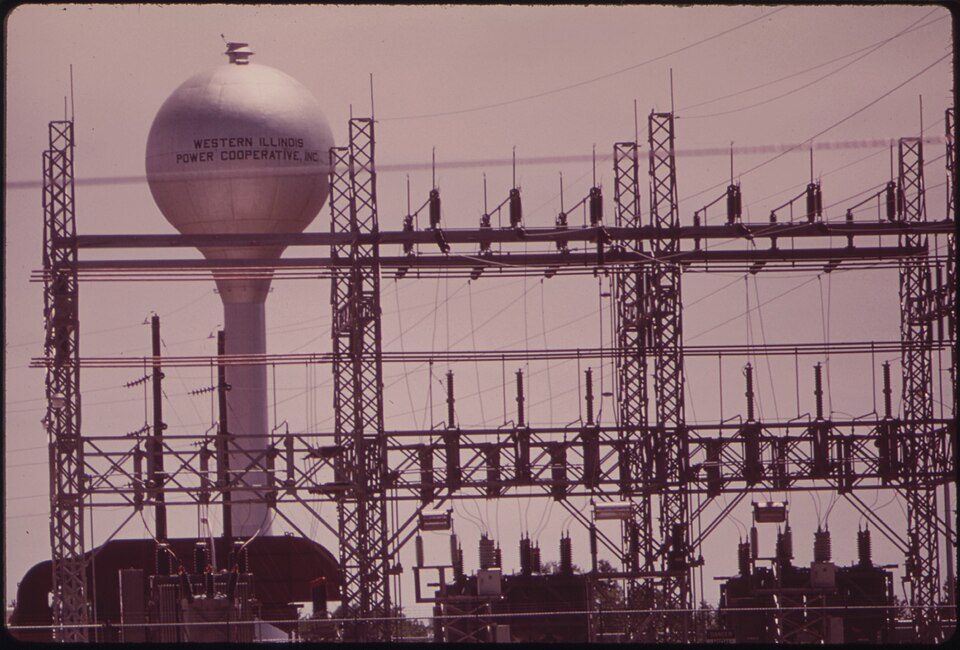
About Marion Power Plant — Williamson County
The Facility and Its Workforce
Southern Illinois Power Cooperative has served rural electric cooperatives throughout southern Illinois since the post-World War II era. The Marion facility, fueled by bituminous coal from Williamson County and the Illinois Basin, was central to SIPC’s generation portfolio for decades.
The workforce came largely from the same regional trades that built southern Illinois and the broader Mississippi River industrial corridor — boilermakers, pipefitters, insulators, electricians, millwrights, and laborers who moved fluidly between job sites throughout the region, and for some, across the river. One outage at Marion, the next at another Illinois Basin generating station or across the river in Missouri, and back again.
Asbestos exposure Illinois workers experienced did not stop at the state line — and neither does your right to pursue a claim. Whether you worked entirely in Illinois or crossed the river for out-of-state plant assignments, a qualified asbestos attorney can evaluate your full exposure history.
Why Coal-Fired Plants Were Saturated with Asbestos
Coal-fired power generation requires extreme heat, high-pressure steam, and miles of insulated pipe. From the 1930s through the late 1970s, asbestos was the material of choice for every thermal application in facilities like Marion.
Workers at Granite City Steel in Madison County, Illinois, and at the Monsanto chemical complex in the St. Louis metro area faced identical exposures from the same manufacturers and the same product lines. Workers at Ameren UE plants across the Mississippi River — including Labadie Energy Center in Franklin County, Missouri, Portage des Sioux Power Plant in St. Charles County, and Rush Island Energy Center in Jefferson County — encountered the same products under the same conditions, and their litigation history directly informs what we know about Marion.
Industrial Illinois and the entire Mississippi River corridor — from the southern Illinois coalfields through Madison and St. Clair Counties and across the river — were built with asbestos. Marion was one piece of that picture. If you worked anywhere in that corridor, your legal rights deserve immediate attention from a toxic tort attorney who knows this geography and its documented defendants.
At Marion specifically, asbestos-containing materials were present in:
- Boilers operating above 1,000°F, insulated with calcium silicate pipe insulation block insulation manufactured by and later
- High-pressure steam turbines and their casings, lagged with Thermobestos pipe covering manufactured by
- Miles of insulated pipe wrapped in pipe insulation and high-temperature pipe insulation pipe insulation manufactured by
- Valve packing, gaskets, and flanges, including Cranite sheet gaskets manufactured by
- Electrical equipment requiring fire-resistant insulation, including asbestos-containing switchgear components
- Structural fireproofing applied as spray-applied fireproofing spray-applied fireproofing manufactured by, covering structural steel throughout the facility
- Floor tile and ceiling products, including Gold Bond asbestos-containing board manufactured by , and aggressively marketed these products to utilities and industrial contractors throughout the Midwest. No warnings were given. No substitutes were offered. The health consequences were buried in industry documents for decades while workers at Marion continued to be poisoned.
Those companies — and dozens like them — may be liable through asbestos lawsuit verdicts, trust fund distributions, and negotiated settlements. That compensation is only available if you act before your deadline expires.
Asbestos exposure Illinois tradespeople experienced at Marion followed a pattern common to every coal-fired facility built and operated during this era — the same pattern documented in litigation arising from Granite City Steel, the Monsanto facilities, Labadie, and Portage des Sioux along both banks of the Mississippi.
Construction Phase (typically 1950s–1960s): Workers who built Marion installed asbestos in virtually every thermal application. They applied calcium silicate pipe insulation block insulation to boiler surfaces by hand. They wrapped steam pipe in high-temperature pipe insulation and Thermobestos pipe covering. They troweled spray-applied fireproofing fireproofing onto structural steel. They installed ceiling tile asbestos-containing board throughout auxiliary buildings. They cut asbestos block, laid asbestos rope, and mixed asbestos cement in enclosed spaces with no ventilation and no protection.
Operational Maintenance (1950s–late 1970s): Every routine maintenance task that involved opening a pipe, breaking a flanged connection, or repairing a valve disturbed previously installed high-temperature pipe insulation, Thermobestos, or calcium silicate pipe insulation. Pipefitters who cut through asbestos-wrapped pipe were directly in the dust cloud. Electricians drilling through walls adjacent to insulated pipe runs breathed fibers they couldn’t see.
Many of these workers carried those fibers home on their clothing to families in Williamson County, Marion, and throughout southern Illinois. Those family members may have their own legal claims — claims subject to the same strict Illinois asbestos filing deadlines.
Outages and Turnarounds (1960s–1980s and beyond): Major scheduled outages brought dozens or hundreds of outside contractors into the plant simultaneously — many dispatched through Boilermakers, UA Pipefitters, and Heat and Frost Insulators union halls. Boilermakers worked inside boiler drums surrounded by asbestos-containing refractory castables. Insulators stripped and replaced miles of high-temperature pipe insulation and Thermobestos pipe covering. Gasket mechanics broke Cranite sheet gaskets from flanged connections throughout the steam system. These concentrated work periods generated some of the heaviest documented asbestos exposures in the history of the Mississippi River industrial corridor.
If you were dispatched to Marion for outage work even once, that single assignment may be sufficient grounds for an asbestos lawsuit.
Post-Regulation Continuation (1970s–1990s): Even after OSHA began regulating asbestos in 1972, the high-temperature pipe insulation, Thermobestos, calcium silicate pipe insulation, and spray-applied fireproofing already installed at Marion stayed in place. Workers who disturbed that legacy material — even decades after its original installation — continued to receive dangerous exposures. Regulatory compliance was inconsistent. Protective measures that existed on paper were routinely not implemented in the field.
If your exposure continued into the 1980s or 1990s and you have received a recent diagnosis, Illinois’s 2-year statute of limitations (735 ILCS 5/13-202) is running right now. There is no safe reason to wait.
Call an Illinois mesothelioma attorney today.
General Equipment at Marion Power Plant — Williamson County
The equipment below represents the systems and infrastructure documented or typically present at this facility during the era when asbestos-containing materials were specified in industrial construction. This is general facility-equipment reference — not a legal attribution of any specific product, manufacturer, or exposure event to this facility. Material-category and manufacturer information is addressed in the AsbestosIndex Product Crosswalk linked under the records table below.
Documented Asbestos Evidence — Illinois
The records below are verified, state-documented asbestos removals at this facility. Each entry represents a regulated abatement project where the Illinois Environmental Protection Agency (Illinois EPA) was notified under federal NESHAP rules, the work was logged, and the asbestos-containing material was confirmed and removed under regulated conditions. These are not allegations or estimates — they are paper records tying documented asbestos-containing material to this specific site.
The following 1 project notification(s) are documented with the Illinois EPA (NESHAP program) for Capital Millbottom LLC. These are public regulatory records.
| Project ID | Year | Site / Building | Operation | ACM Removed | Contractor |
|---|---|---|---|---|---|
| A6086-2013 | 2013 | Former Ameren Power Plant | Renovation | 170sf frbl elevated tank, 170lf basement pipe insulation, 210lf frbl main flo… | Asbestos Removal Services, Inc. |
Source: Illinois EPA, NESHAP Asbestos Abatement & Demolition/Renovation Notification Program — public regulatory records.
Material Categories in Documented Records
The materials documented above (and similar asbestos-containing materials commonly encountered in records of this type) appear in the AsbestosIndex catalog with historical manufacturer and trust-fund information. Click a category to view manufacturers historically associated with that material:
Illinois — Filing Deadline & Next Steps
Illinois law gives mesothelioma and asbestos-disease claimants 2 years from the date of medical diagnosis to file a personal-injury lawsuit (735 ILCS 5/13-202). For wrongful-death claims after an asbestos-related death, the filing window is 2 years from the date of death (740 ILCS 180/2). The two deadlines run on separate tracks — preserving one does not extend the other.
The personal-injury clock runs from diagnosis, not from exposure. Mesothelioma latency is typically 20 to 50 years, so workers exposed in the 1950s–1980s are being diagnosed today.
Practical first steps
- Document what you remember. Pay stubs, W-2s, union cards, photographs, coworker names, and dates of employment. The WorkChain widget on this page can save a copy you can email yourself.
- Preserve medical records. Pathology reports, biopsy results, imaging, and pulmonary-function tests are central to both civil claims and trust-fund filings.
- Identify household members. Spouses who laundered work clothing and children of plant workers are eligible for secondary-exposure claims when diagnosed with an asbestos-related disease.
- Speak with an asbestos attorney with Illinois experience. The first conversation is free and confidential. Asbestos trust-fund claims and civil claims run on different tracks — both can be pursued in parallel.
Asbestos-Related Diseases — Illinois
Asbestos fiber exposure can cause several specific diseases that typically appear decades after the original exposure. The latency period — the gap between exposure and diagnosis — usually runs 20 to 50 years. That's why workers exposed in the 1960s, 1970s, and 1980s are receiving diagnoses today.
Mesothelioma
A rare, aggressive cancer that affects the lining of the lungs (pleural mesothelioma), abdomen (peritoneal), or heart (pericardial). Mesothelioma is almost exclusively caused by asbestos exposure, which is why a mesothelioma diagnosis often points directly to historical workplace exposure. Average latency from first exposure to diagnosis is 30-50 years.
Asbestosis
A chronic, non-cancerous scarring of lung tissue caused by inhaled asbestos fibers. Asbestosis causes progressive shortness of breath, persistent cough, and reduced lung function. It does not improve with treatment, and it is a recognized basis for a claim under most trust schedules and civil claims.
Lung Cancer
Asbestos exposure significantly increases the risk of lung cancer, particularly when combined with a history of smoking. Asbestos-related lung cancer is compensable under the same trust schedules and civil claim avenues as mesothelioma.
Other Recognized Diseases
Pleural plaques, pleural thickening, laryngeal cancer, ovarian cancer, and certain gastrointestinal cancers are also recognized as asbestos-related under various trust schedules and case-law authorities, though eligibility and proof requirements vary by claim type.
If you have any of these diagnoses and you worked at this facility, lived with someone who did, or were exposed in any documented capacity, you may have a claim worth pursuing. Speak with an attorney before assuming you don't qualify.
Data Sources — Illinois
Information about facility equipment, industrial materials, and occupational records referenced on this page is drawn from publicly available sources where applicable, including:
- EPA ECHO Facility Compliance Database — enforcement and compliance records for industrial facilities
- OSHA Establishment Search — federal workplace inspection history
- EIA Form 860 Plant Data — power-plant equipment and ownership records (where applicable)
- Illinois Environmental Protection Agency NESHAP asbestos abatement notification records
- Published asbestos trial and trust fund records (publicly filed court documents)
- AsbestosIndex Product & Manufacturer Crosswalk — historical asbestos-containing product schedules linked to manufacturers
If specific equipment or product claims in this article are sourced from a non-public database, the source is identified parenthetically within the text above.