Mesothelioma Lawyer Missouri: Legal Guide for Hennepin Power Station Asbestos Exposure
If you worked at Illinois Power’s Hennepin Power Station and you’ve been diagnosed with mesothelioma or asbestosis, you may have a claim worth pursuing—and a deadline that cannot be missed. Missouri’s statute of limitations gives you 5 years from the date of diagnosis to file. Miss that window and your case is gone. This guide explains what happened at Hennepin, who was exposed, and what a mesothelioma lawyer Missouri can do for you right now.
⚠ Missouri’s 5-Year Filing Deadline — Do Not Wait
Missouri law gives you 5 years from diagnosis to file an asbestos claim. Mo. Rev. Stat. § 516.120. That clock is running today.
Pending 2026 legislation threatens to cut that period to just 2 years and add procedural obstacles that will kill otherwise viable cases. Whether or not that legislation passes, waiting costs you. Witnesses die. Records disappear. Defendants liquidate assets into trusts with capped payouts.
If you’ve been diagnosed, call an asbestos attorney Missouri today. Not next month.
The Hennepin Power Station Asbestos Legacy
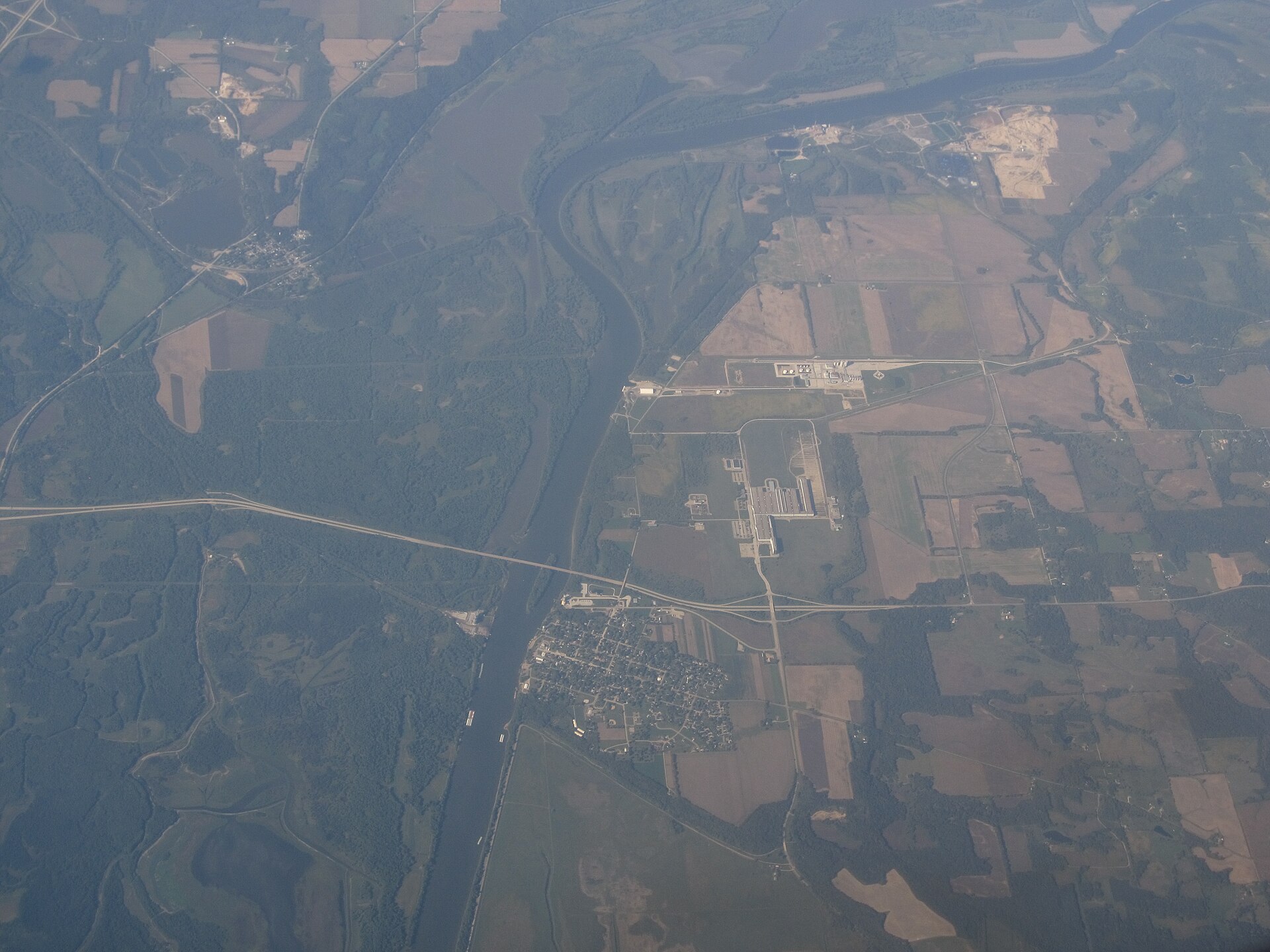
The Hennepin Power Station operated for decades as one of central Illinois’s largest coal-fired generating facilities, situated along the Illinois River in Hennepin, Putnam County—roughly 100 miles southwest of Chicago. Workers, contractors, and their families are now dealing with the consequences: mesothelioma, asbestosis, and lung cancer tied to systematic asbestos exposure that the manufacturers of these products knew was dangerous and concealed anyway.
If you worked at Hennepin between the 1940s and 1980s—as a direct Illinois Power employee or as a maintenance contractor—you may have been exposed to asbestos and may be entitled to substantial compensation. Mesothelioma typically develops 20 to 50 years after first exposure. Workers from the 1970s and early 1980s are only now receiving diagnoses.
An experienced asbestos attorney Missouri can evaluate your claim against manufacturers including Johns-Manville, Owens Corning, Armstrong World Industries, Garlock Sealing Technologies, Celotex Corporation, and W.R. Grace—companies that sold asbestos-containing products to facilities like Hennepin while allegedly concealing the known health risks from the workers handling them.
Ownership and Corporate History
The Hennepin Power Station was owned and operated by Illinois Power Company, incorporated in 1923 and serving central and southern Illinois as a major investor-owned utility. Ameren Corporation later acquired Illinois Power’s assets through corporate merger. Successor entities have faced litigation over occupational health liabilities arising from the Illinois Power era.
Insulation work at Hennepin was performed in significant part by members of Heat and Frost Insulators Local 1 (St. Louis, MO) and Heat and Frost Insulators Local 27 (Kansas City, MO)—union members from Missouri who traveled to Illinois Power facilities throughout the Mississippi River corridor, then came home to their families carrying asbestos fibers on their clothes and in their lungs.
Why Asbestos Was Used at Power Stations
Power generating stations ran hotter, longer, and harder than almost any other industrial environment. Asbestos was specified because nothing else performed comparably at scale:
- Withstands temperatures exceeding 1,000°F without degrading
- Low thermal conductivity—critical for boiler and steam system efficiency
- Resistant to steam, acids, and industrial chemicals
- Woven into gaskets and packing by Garlock and others for its tensile strength
- Cheap enough to be applied throughout an entire facility
Every major system at Hennepin required asbestos protection: boilers, steam lines, turbine housings, feedwater heaters, electrical switchgear. The industry treated Johns-Manville Kaylo, Owens Corning products, and Armstrong World Industries thermal insulation as standard specifications—which is precisely why manufacturers cannot claim they didn’t know where their products ended up or how they were used.
How Exposure Occurred at Hennepin: A Timeline
Construction Phase (1940s–1950s)
Initial construction required workers to cut, shape, and apply asbestos-containing insulation in partially enclosed spaces with no dust control and no respiratory protection:
- Boilers and furnaces wrapped with Johns-Manville block insulation containing amosite asbestos
- Steam pipes covered with Kaylo pipe covering
- Turbines insulated with Owens Corning Fiberglas products
- Piping systems sealed with Garlock compressed asbestos sheet gaskets
Exposure at this stage was severe. Workers handled raw asbestos products all day, every day, in confined spaces.
Expansion Phase (1950s–1960s)
Postwar capacity additions brought new generating units with additional Johns-Manville Kaylo, Armstrong insulation, and Garlock gaskets. New construction ran alongside operating equipment, and asbestos dust from spray-applied fireproofing operations migrated freely into areas where UA Local 562 pipefitters were working. No one told those workers what they were breathing.
Maintenance and Outage Cycles (1960s–1980s)
Scheduled outages for inspection and repair were among the highest-exposure events in a power plant worker’s career. During these shutdowns, workers allegedly:
- Removed existing asbestos insulation to access equipment for repair
- Replaced damaged insulation with Kaylo pipe covering and Aircell products
- Cut new gaskets from Garlock and Johns-Manville compressed asbestos sheet
- Repacked valve stems with braided asbestos rope packing on Crane Co. and other valves
- Mixed and applied finishing cements and plasters containing chrysotile asbestos
Workers in adjacent trades—electricians, instrument technicians, operating engineers—were exposed to the same airborne fibers without touching the insulation themselves.
The Regulatory Era (1970s–1980s)
OSHA began regulating occupational asbestos exposure in the early 1970s. EPA restricted spray-applied asbestos fireproofing. Compliance at Illinois Power facilities was reportedly uneven. Asbestos installed during earlier decades remained in place throughout the facility and continued releasing fibers during every subsequent maintenance cycle. Replacement materials from Johns-Manville, Celotex, and W.R. Grace were still being specified and installed. Workers continued to be exposed, and many were never told.
Asbestos-Containing Products Documented at Illinois Power Facilities
Thermal Insulation
Pipe Covering and Block Insulation
- Johns-Manville Corporation — Kaylo pipe covering and block insulation
- Owens Corning Fiberglas — high-temperature pipe insulation and block products
- Armstrong World Industries — thermal insulation for piping systems
- Celotex Corporation — pre-formed pipe sections and block insulation
Boiler Insulation
High-temperature block insulation containing amosite asbestos. Products from Johns-Manville, Philip Carey, and Owens-Illinois were widely used at power-generating facilities of this type throughout the region.
Finishing Cements
Workers mixed and applied finishing cements to create protective outer surfaces over insulated systems—a task that released asbestos directly into the breathing zone.
- Philip Carey Manufacturing Company — Thermobestos finishing cement
- Johns-Manville — asbestos finishing plaster
Gaskets and Packing Materials
A coal-fired power plant of Hennepin’s size contained thousands of flanged piping connections. Every one of them required a gasket. UA Local 562 members cut those gaskets from compressed asbestos sheet stock, generating airborne dust with every cut.
- Garlock Sealing Technologies
- Johns-Manville
- Flexitallic Gasket Company
Valve stem packing required braided asbestos rope or compressed asbestos fiber. Pipefitters performing routine valve repacking on Crane Co. and other valves encountered asbestos dust as a matter of course.
Refractory and Fireproofing
Boilers, furnaces, and flue gas systems were lined with asbestos-containing refractory materials. Structural steel was protected with spray-applied fireproofing—including W.R. Grace Monokote—that released extremely high fiber counts during application. Workers in the vicinity of these operations during the 1950s and 1960s may have received some of the highest asbestos doses documented in the power generation industry.
Who Was Exposed at Hennepin Power Station
Direct Illinois Power Employees
Long-term employees held jobs that placed them in repeated, sustained contact with asbestos throughout their careers:
- Operating Engineers — managed boiler and turbine systems surrounded by asbestos insulation
- Maintenance Mechanics — performed routine repairs on asbestos-insulated equipment
- Pipefitters — cut, fitted, and sealed piping with Garlock gaskets and Johns-Manville packing
- Insulators — removed, installed, and repaired asbestos insulation daily
- Laborers and Helpers — handled asbestos-containing materials throughout the facility
Contract Workers and Unionized Trades
Contractors and union members performed construction, expansion, and maintenance work at Hennepin across multiple decades:
- Heat and Frost Insulators Local 1 (St. Louis, MO) — insulation specialists across the Mississippi River corridor
- Heat and Frost Insulators Local 27 (Kansas City, MO) — Kansas City region and peripheral Illinois facilities
- United Association Local 562 — pipefitters and plumbers throughout the region
These Missouri union members worked at Hennepin, returned home, and may have carried asbestos fibers into their households. Wives and children who laundered contaminated work clothing have developed mesothelioma from that secondary exposure.
Missouri Residents Along the Mississippi River Corridor
The Hennepin Power Station did not operate in isolation. Missouri residents who worked at Hennepin, traveled to the facility as contractors, or worked at related Mississippi River industrial sites may have been exposed to asbestos from the same manufacturers and the same products. If you lived in Missouri and worked anywhere along this corridor, your exposure history is worth reviewing with a qualified mesothelioma lawyer Missouri.
Your Legal Options
Asbestos Litigation
Personal injury lawsuits against the manufacturers who supplied asbestos-containing products to Hennepin are the primary vehicle for compensation. These claims target the companies that manufactured, sold, and distributed the products—Johns-Manville, Garlock, W.R. Grace, Owens Corning, Celotex, Armstrong—not necessarily your employer. Manufacturers are alleged to have known for decades that their products caused fatal disease and concealed that information from workers.
Missouri courts have jurisdiction over claims brought by Missouri residents, and St. Louis has historically been a favorable venue for asbestos plaintiffs.
Asbestos Bankruptcy Trust Claims
Many major asbestos manufacturers—including Johns-Manville, Owens Corning, and W.R. Grace—filed for bankruptcy and established dedicated asbestos compensation trusts. These trusts exist specifically to compensate workers like those who were exposed at Hennepin. Trust claims can often be filed simultaneously with litigation, and they operate on their own deadlines separate from court statutes of limitations.
An experienced asbestos attorney Missouri will identify every trust for which you may qualify and file claims on your behalf without delay.
Veterans’ Claims
If you served in the U.S. Navy or in military construction roles before your time at Hennepin, you may have additional VA claims available. Navy veterans have among the highest mesothelioma rates of any occupational group due to shipboard asbestos exposure.
What Compensation May Be Available
Past results in cases involving power plant workers and similar industrial exposures have resulted in settlements and verdicts ranging from hundreds of thousands to millions of dollars, depending on diagnosis, exposure history, and the defendants involved. Past results do not guarantee future outcomes, and every case is different. What can be said with certainty is that families who wait and miss the filing deadline recover nothing.
Compensation may cover:
- Medical expenses, including surgery, chemotherapy, and immunotherapy
- Lost income and diminished earning capacity
- Pain and suffering
- Travel and care costs
Litigation Landscape
Coal-fired power stations like the Illinois Power Hennepin Station historically relied on asbestos-containing materials for thermal insulation, gaskets, pipe wrapping, boiler components, and equipment sealing. Workers in maintenance, operations, and construction roles faced significant exposure during the facility’s operational years.
Documented asbestos litigation arising from power plant exposures has identified several major manufacturers as defendants. Combustion Engineering supplied boiler and steam system components containing asbestos. Johns-Manville (now Berkshire Hathaway) manufactured insulation products widely used in power generation settings. Babcock & Wilcox produced boiler tubes and fittings with asbestos. Crane Co. supplied valves and pipe fittings. Armstrong Corporation and Garlock Sealing Technologies provided gaskets and packing materials. W.R. Grace supplied thermal insulation products used in power plant construction and maintenance.
Many of these manufacturers established bankruptcy trust funds to compensate injured workers. The Combustion Engineering Asbestos Settlement Trust, Johns-Manville Asbestos Personal Injury Settlement Trust, Babcock & Wilcox Industries Trust, Crane Co. Asbestos Personal Injury Settlement Trust, and Armstrong Utilities Inc. Asbestos Settlement Trust remain accessible to claimants with documented exposure histories at facilities of this type.
Workers employed at power stations during periods when asbestos products were in active use have pursued claims through both trust filings and traditional litigation. Exposure pathways at thermal generation facilities—including maintenance of boiler systems, insulation work, and equipment repairs—have been well-documented in publicly filed litigation across multiple jurisdictions.
Former workers or their families who believe they were exposed to asbestos at the Illinois Power Hennepin Station should contact an experienced Missouri asbestos attorney to evaluate their eligibility for compensation and discuss available remedies.
Missouri DNR Asbestos Notification Records
The following 4 project notification(s) are documented with the Missouri Department of Natural Resources (NESHAP program) for Ameren Missouri in Labadie. These are public regulatory records.
| Project ID | Year | Site / Building | Operation | ACM Removed | Contractor |
|---|---|---|---|---|---|
| A6884-2015 | 2016 | 2016 O&M Ameren Labadie Power Station | OM | Will advise per project. | Envirotech, Inc. |
| A7273-2017 | 2017 | Ameren Labadie Power Station | Renovation | 800sf frbl TSI, 128sf n-f galbestos, 200lf frbl TSI, 20lf frbl gasket | Envirotech, Inc. |
| 5959-2013 | 2013 | Labadie Energy Center Microwave Bldg | Demolition | caulk, metal siding (asb contr=CENPRO) (NF I-550sf; NF II-91lf) | Plocher Construction Company Inc. |
| 11366-2022 | 2022 | Ameren Labadie Entrance Bridge | Demolition | none | Spirtas Wrecking Company |
Source: Missouri Department of Natural Resources, NESHAP Asbestos Abatement & Demolition/Renovation Notification Program — public regulatory records.
Recent News & Developments
No facility-specific news articles, regulatory enforcement actions, or litigation records involving the Illinois Power Hennepin Power Station in Putnam County, Illinois appear in current public databases or recently scraped sources. However, the following context drawn from public records and regulatory history provides relevant background for workers and former employees researching their exposure history at this site.
Regulatory Landscape
Coal-fired generating stations of the type operated at Hennepin are subject to the National Emission Standards for Hazardous Air Pollutants (NESHAP), codified at 40 CFR Part 61, Subpart M, which governs asbestos-containing materials during renovation and demolition activities. Facilities of this class are also subject to OSHA’s asbestos construction standard at 29 CFR 1926.1101 and the general industry standard at 29 CFR 1910.1001. Any major maintenance work, turbine overhaul, boiler repair, or infrastructure upgrade conducted at the Hennepin station during its operational years would have triggered these regulatory requirements, assuming they were in force at the time of the work.
Decommissioning and Closure Activity
The Hennepin Power Station, which operated as part of Illinois Power’s generating fleet, has been subject to the broader industry-wide trend of coal plant retirements across Illinois and the Midwest. Decommissioning and demolition activities at older coal-fired facilities are among the highest-risk events for asbestos fiber disturbance, as boiler insulation, turbine lagging, pipe wrap, and fireproofing materials installed in mid-twentieth century construction frequently contained asbestos products from manufacturers including Johns-Manville, Owens-Illinois, Armstrong World Industries, Babcock & Wilcox, and Combustion Engineering. No specific NESHAP notification filings or EPA enforcement actions related to the Hennepin station appear in publicly accessible federal enforcement databases at this time, though such records may exist at the Illinois EPA or EPA Region 5 level.
Product Identification Context
Power stations of the Hennepin facility’s construction era routinely incorporated asbestos-containing boiler block insulation, high-temperature pipe covering, turbine packing, and refractory cement. Products manufactured by W.R. Grace, Carey-Canada, and Celotex were also commonly installed in electrical and mechanical infrastructure at similar Illinois utility facilities. Workers in boilermaker, pipefitter, insulator, and millwright trades at such stations historically encountered these materials during both routine maintenance and unplanned repair outages.
No Recent Litigation Records Located
No publicly reported asbestos verdicts, settlements, or filed lawsuits specifically naming the Hennepin Power Station as a site of exposure have been identified in reviewed court records. This does not preclude the existence of sealed settlements or confidential trust fund claims filed through asbestos bankruptcy trusts established by former product manufacturers.
Workers or former employees of Illinois Power Hennepin Power Station Putnam County Illinois who were diagnosed with mesothelioma, lung cancer, or asbestosis may have legal rights under Missouri law. Missouri § 537.046 extends the civil filing window for occupational disease claims.
For informational purposes only. Not legal advice. No attorney-client relationship is created by reading this page. © 2026 Rights Watch Media Group LLC — Disclaimer · Privacy · Terms · Copyright
